
Nashville’s humid subtropical climate creates unique challenges for asphalt shingle roofs. The combination of high summer humidity often exceeding 70-80% and frequent thunderstorms accelerates the breakdown of shingle adhesives and compromises long-term roof health. Understanding these effects helps homeowners protect their investment and prevent costly structural damage.
Humidity affects roofing materials through a process called thermal shock. When moisture penetrates shingle layers and then rapidly heats or cools, the expansion and contraction cycle weakens adhesive bonds. This degradation happens faster in Nashville than in drier climates because our dew points regularly stay above 65°F during summer months, creating constant moisture exposure. Roofing La Vergne.
The adhesive failure manifests in several ways. First, the sealant strips between shingles lose their grip, allowing wind-driven rain to infiltrate beneath the roofing system. Second, the asphalt base becomes more pliable in humid conditions, making shingles vulnerable to foot traffic damage and granule loss. Third, trapped moisture creates an ideal environment for organic growth that further compromises roof integrity. Choosing Between Shingles and Metal for Your New Hendersonville Roof.
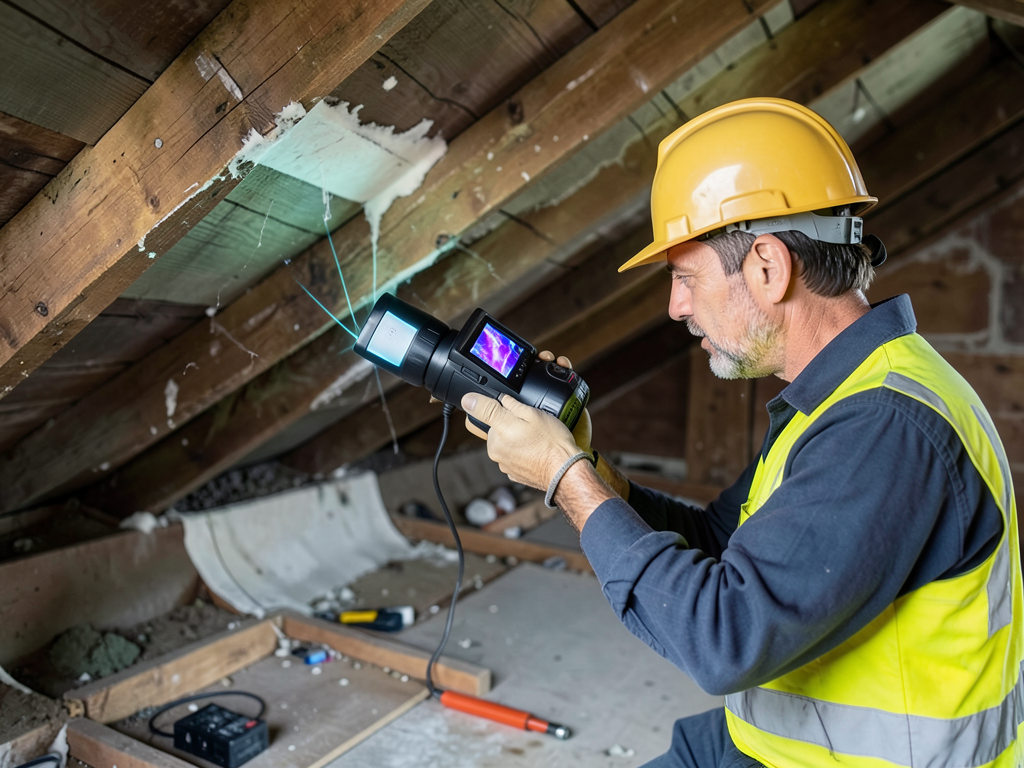
Diagram showing how humidity penetrates asphalt shingle layers and causes thermal expansion that breaks adhesive bonds over time.
5 Warning Signs of Humidity Damage on Your Roof
Recognizing early warning signs prevents minor issues from becoming major structural problems. These five indicators suggest your roof is suffering from Nashville’s humidity:
1. Algae and Mold Growth (Gloeocapsa Magma)
Black streaks running vertically down your roof indicate Gloeocapsa magma growth. This blue-green algae thrives in Nashville’s humid conditions, feeding on limestone filler in asphalt shingles. The algae create dark stains that absorb more heat, accelerating shingle deterioration. Left untreated, these colonies can spread across entire roof planes within two to three humid seasons.
2. Shingle Buckling and Curling
Curled shingle edges form when moisture warps the organic mat beneath the asphalt coating. You’ll notice edges lifting away from the roof deck, creating gaps where water can penetrate. Buckling appears as wavy patterns across shingle rows, caused by uneven moisture absorption in the underlying decking material. Both conditions compromise the roof’s water-shedding ability.. Read more about Plywood vs OSB Roof Decking for Long Term Stability in Nashville.
3. Granule Loss and Accelerated Aging
Excessive granule loss shows up as sandy accumulation in gutters and downspouts. Humidity accelerates this process by weakening the asphalt’s bond to protective mineral granules. Without this UV-protective layer, shingles age prematurely, becoming brittle and prone to cracking. Check for bald spots on shingle surfaces, especially on south-facing slopes that receive the most sun exposure.
4. Rotted Decking and Structural Weakness
Moisture trapped beneath shingles eventually reaches the roof decking. OSB or plywood absorbs this moisture, expanding and contracting with humidity cycles. Over time, this creates soft spots that feel spongy when walked upon. In severe cases, you might notice ceiling stains inside your home, indicating water has penetrated through compromised decking layers.
5. Compromised Flashing and Sealant Failure
Roof penetrations around chimneys, vents, and skylights rely on metal flashing and rubber seals. High humidity accelerates the breakdown of these materials. Rubber seals become brittle and crack, while metal flashing corrodes faster in our moisture-rich air. These failures create entry points for water that can damage interior walls and insulation.
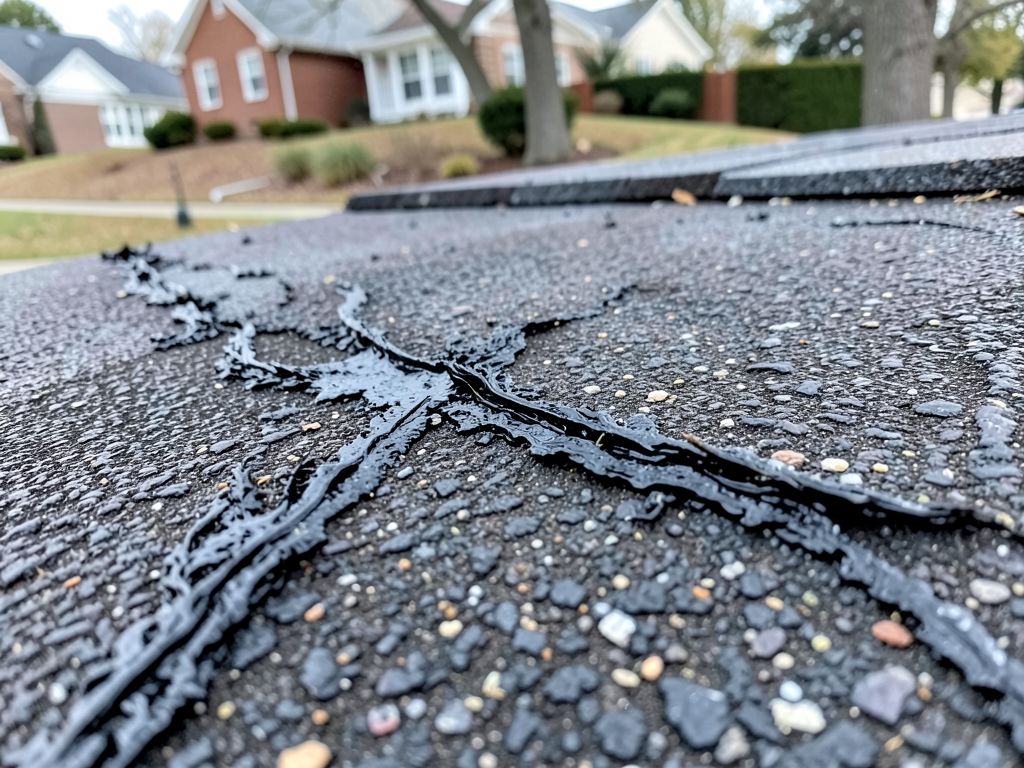
Close-up photo showing black algae streaks (Gloeocapsa magma) on asphalt shingles in a Nashville neighborhood, demonstrating typical humidity-related growth patterns.
Why Nashville’s Climate is Particularly Harsh on Asphalt Shingles
Nashville sits in the humid subtropical climate zone (Köppen Cfa classification), characterized by hot summers and consistent moisture. Our average July humidity reaches 75%, with dew points often exceeding 70°F. This creates a perfect storm for roof degradation that homeowners in drier climates rarely experience.
The Cumberland River and surrounding lakes contribute to our elevated humidity levels. Morning fog and evening condensation create daily moisture cycles that stress roofing materials. Additionally, Nashville’s position in “Dixie Alley” exposes us to frequent severe thunderstorms during humid summer months, where high winds and driving rain exploit weakened shingle adhesives. Roofing Columbia.
Temperature fluctuations compound the humidity problem. Our summers regularly see 90°F days followed by 70°F nights, creating thermal expansion and contraction cycles. When combined with moisture penetration, this thermal shock breaks down adhesive bonds faster than either factor alone. The result is shingles that lose flexibility and become prone to cracking within their expected lifespan.
Preventative Measures: Attic Ventilation and Proper Insulation
Proper attic ventilation serves as your first line of defense against humidity damage. Building codes require minimum ventilation ratios, typically 1 square foot of net free area per 150 square feet of attic space. However, Nashville’s climate often demands higher ventilation rates to combat our persistent humidity.
Effective ventilation systems use a combination of intake and exhaust vents. Soffit vents draw cool, dry air into the attic while ridge vents or powered exhaust fans push hot, moist air out. This continuous airflow prevents moisture buildup that would otherwise condense on the underside of roof decking. Without proper ventilation, attic temperatures can exceed 150°F in summer, baking shingles from below.
Attic insulation works hand-in-hand with ventilation. Proper insulation maintains consistent attic temperatures, reducing the temperature differential that causes condensation. In Nashville, R-38 to R-49 insulation in attics provides optimal moisture control. Pay special attention to sealing gaps around light fixtures, plumbing stacks, and attic access points where humid air can infiltrate living spaces.
Consider installing a whole-house dehumidifier if your home experiences persistent humidity issues. These systems can maintain indoor relative humidity between 30-50%, creating a buffer that protects both your roof and your home’s interior from moisture damage. The investment typically pays for itself through improved comfort and reduced energy costs.
When to Call a Nashville Roofing Expert for a Humidity Inspection
Schedule a professional roof inspection if you notice any warning signs or if your roof is over 15 years old. Nashville’s humidity accelerates aging, so roofs often need replacement 5-7 years earlier than manufacturers estimate. A qualified inspector uses moisture meters to detect trapped water in decking and thermal imaging to identify ventilation problems.
Pay attention to your energy bills. Unexplained increases in cooling costs often indicate compromised roof ventilation. When hot, humid air gets trapped in your attic, your air conditioning works harder to maintain comfortable temperatures. This creates a cycle where poor ventilation leads to higher energy costs, which could have been prevented with proper roof maintenance.
Don’t wait for visible leaks to call for help. By the time water stains appear on your ceiling, significant damage has already occurred. Professional inspections can identify potential problems before they cause interior damage. Most reputable Nashville roofing companies offer free inspections and can provide specific recommendations for your home’s unique situation.
Consider your roof’s age and material. Three-tab shingles typically last 15-20 years in our climate, while architectural shingles might reach 25 years with proper maintenance. However, these timelines assume adequate ventilation and maintenance. Homes in older Nashville neighborhoods like East Nashville or 12 South often have roofs nearing replacement age due to decades of humidity exposure.
Photo showing a moisture meter being used to test roof decking for water infiltration, demonstrating the diagnostic process used by professional roofing inspectors.
Humidity-Resistant Roofing Options for Nashville Homes
While traditional asphalt shingles remain popular, several alternatives offer better humidity resistance. Metal roofing reflects heat and doesn’t support organic growth, making it ideal for humid climates. Modern metal systems include ventilation channels that prevent moisture buildup and can last 40-70 years with minimal maintenance.
Synthetic roofing materials like polymer composites resist moisture absorption and won’t warp or rot like organic-based products. These materials often include antimicrobial additives that prevent algae and mold growth. While the upfront cost exceeds traditional shingles, the extended lifespan and reduced maintenance make them cost-effective for many Nashville homeowners.
For historic homes in areas like Germantown or Edgefield, maintaining architectural authenticity while improving moisture resistance requires careful material selection. Modern asphalt shingles now offer algae-resistant variants with copper-infused granules that prevent organic growth. These products cost 15-20% more but can extend roof life by 5-10 years in humid conditions.
Consider your home’s specific exposure when selecting roofing materials. South-facing slopes receive more UV radiation and heat, requiring materials with enhanced UV protection. Homes surrounded by mature trees might benefit from algae-resistant products since shade creates conditions favorable for organic growth. A qualified roofing contractor can recommend materials optimized for your home’s unique conditions.
Maintenance Schedule for Nashville’s Humid Climate
Establish a regular maintenance routine to combat humidity effects. Clean your gutters twice yearly, ideally in late spring and early fall, to prevent water backup that can force moisture under shingles. Remove debris from roof valleys where organic material can trap moisture and support algae growth.
Inspect your attic quarterly for signs of moisture problems. Look for dark spots on rafters, rusted nail heads, or musty odors that indicate condensation issues. Check that all vents remain unobstructed by insulation or debris. Consider installing humidity sensors to monitor attic moisture levels, especially during humid summer months.
Professional cleaning removes algae and moss without damaging shingles. Avoid pressure washing, which can strip granules and force water under shingles. Instead, use low-pressure chemical treatments specifically formulated for asphalt shingles. Most manufacturers recommend professional cleaning every 3-5 years, but Nashville’s humidity might require more frequent service.
Document your roof’s condition with photos each season. This creates a baseline for comparison and helps identify developing problems early. Pay special attention to areas around chimneys, skylights, and roof penetrations where flashing and seals are most vulnerable to humidity damage.
Understanding Your Roof Warranty in Humid Conditions
Most shingle manufacturers offer warranties of 20-50 years, but these warranties often contain ventilation requirements. Poor attic ventilation can void your warranty, leaving you responsible for premature roof failure. Read your warranty carefully and ensure your ventilation system meets or exceeds manufacturer specifications.
Document all maintenance and repairs. Many warranties require proof of proper maintenance to remain valid. Keep records of professional inspections, cleaning services, and any repairs performed. This documentation proves you’ve fulfilled your maintenance obligations should you need to file a warranty claim. EPA Mold Resources.
Understand what your warranty covers. Most cover manufacturing defects but not damage from improper installation, inadequate ventilation, or lack of maintenance. Some warranties exclude algae growth or require specific algae-resistant products in humid climates. Work with a qualified contractor who understands warranty requirements and can ensure your installation meets all specifications.
Consider extended warranty options that cover labor and disposal costs. While these add to your upfront investment, they provide peace of mind and protection against unexpected expenses. Some contractors offer workmanship warranties that complement manufacturer warranties, providing comprehensive coverage for your roofing investment.
Cost Factors for Humidity-Related Roof Repairs
Repair costs vary significantly based on damage extent and roof complexity. Minor repairs like replacing a few damaged shingles might cost $300-500, while addressing widespread moisture damage could exceed $5,000. Early intervention always costs less than waiting until structural damage occurs. 24/7 Emergency Roof Repair.
Ventilation improvements represent a significant cost factor. Adding or upgrading ventilation systems typically costs $1,000-3,000 depending on your home’s size and existing infrastructure. However, this investment often pays for itself through improved energy efficiency and extended roof life. Homes with poor ventilation might see cooling costs decrease by 15-25% after upgrades.
Material selection affects both upfront costs and long-term value. While premium algae-resistant or synthetic materials cost more initially, they often prove more economical over time due to reduced maintenance needs and longer replacement intervals. Consider lifecycle costs rather than just initial price when making material decisions.
Insurance coverage varies for humidity-related damage. Most policies cover sudden damage but not gradual deterioration from poor maintenance. Review your policy to understand what’s covered and consider adding riders for specific risks common in Nashville’s climate. Document all damage with photos and professional assessments when filing claims. Solving Common Flat Roof Leaks for Downtown Nashville Condos.
Emergency Response for Humidity-Related Roof Failures
Act quickly when you discover roof problems. Water infiltration can cause extensive damage within hours, especially during humid summer storms. Temporary tarps can prevent further damage while you arrange permanent repairs. Most Nashville roofing contractors offer 24/7 emergency services for urgent situations.
Document damage thoroughly before making repairs. Take photos from multiple angles and note the date and time of discovery. This documentation proves valuable for insurance claims and helps contractors understand the full extent of damage. Keep samples of any damaged materials for insurance adjusters to examine.
Prevent secondary damage by controlling indoor humidity. Use dehumidifiers in affected areas to prevent mold growth in walls and ceilings. Remove wet insulation and drywall that can harbor mold spores. Professional mold remediation might be necessary if moisture has penetrated living spaces.
Develop an emergency plan before problems occur. Know who to call for immediate assistance and keep their contact information readily available. Many reputable Nashville roofing companies maintain emergency response teams specifically trained to handle humidity-related failures during severe weather events.
Future-Proofing Your Roof Against Nashville’s Changing Climate
Climate projections suggest Nashville will experience more extreme heat and humidity in coming decades. Preparing your roof for these conditions now can prevent costly emergency repairs later. Consider upgrading to materials and systems designed for increasingly humid conditions.
Smart home technology offers new ways to monitor roof health. Humidity sensors in attics can alert you to developing moisture problems before visible damage occurs. Some systems integrate with home automation platforms, automatically adjusting ventilation based on real-time humidity readings.
Green roofing options provide natural humidity control while offering environmental benefits. Living roofs absorb rainwater, provide natural insulation, and create habitat for local wildlife. While not suitable for all homes, these systems can significantly reduce heat island effects and manage stormwater runoff in urban areas.
Stay informed about building code updates that address climate change. Nashville and surrounding counties periodically update roofing requirements to reflect changing environmental conditions. Working with contractors who stay current on these changes ensures your roof meets modern standards for moisture management and energy efficiency.
Frequently Asked Questions
How often should I have my roof inspected in Nashville’s humid climate?
Schedule professional inspections annually, ideally in late spring before hurricane season. Additionally, inspect your attic quarterly for moisture signs and after any severe weather events. Homes over 15 years old might benefit from twice-yearly professional inspections due to accelerated aging from humidity exposure.
Can I install new shingles over existing ones to save money?
While code allows one layer of shingles over existing ones, this practice isn’t recommended in humid climates. The added layer traps heat and moisture, accelerating deterioration of both layers. Complete tear-off allows inspection of decking and proper installation of new underlayment, providing better long-term protection against humidity damage.
What’s the best time of year to replace a roof in Nashville?
Spring and fall offer ideal conditions for roof replacement in Nashville. Temperatures between 45-85°F allow proper sealant activation without extreme heat stress. Avoid winter months when cold temperatures prevent proper adhesive bonding, and summer when high humidity can affect installation quality.
How much does proper attic ventilation cost?
Ventilation system costs range from $1,000-3,000 for typical homes, depending on existing infrastructure and required improvements. While this represents a significant investment, proper ventilation can extend roof life by 5-10 years and reduce cooling costs by 15-25%, providing excellent return on investment over time.
Will insurance cover humidity-related roof damage?
Most policies cover sudden damage from covered perils but not gradual deterioration from poor maintenance. Document all maintenance and inspections to support claims. Some insurers offer endorsements for specific climate-related risks. Review your policy annually and discuss coverage options with your agent.
Don’t let Nashville’s humidity compromise your home’s most important protective barrier. Call (615) 640-4994 today to schedule your professional roof inspection. Our experienced technicians understand Middle Tennessee’s unique climate challenges and can recommend solutions to protect your investment for years to come. Whether you need emergency repairs or a complete roof replacement, we’re here to help you make informed decisions about your home’s protection. For more information, visit ASHRAE Ventilation Standards.
{
“@context”: “https://schema.org”,
“@type”: “BlogPosting”,
“headline”: “The Impact of High Humidity on Shingle Adhesives and Long Term Roof Health”,
“description”: “Discover how Nashville’s humid subtropical climate affects shingle adhesives and causes long-term roof damage. Learn warning signs and prevention tips from local roofing experts.”,
“wordCount”: 2654,
“datePublished”: “2026-04-02T07:37:00.000Z”,
“dateModified”: “2026-04-02T07:37:00.000Z”,
“inLanguage”: “en-US”,
“mainEntityOfPage”: {
“@type”: “WebPage”,
“@id”: “https://titanroofingnashville.com”
},
“publisher”: {
“@type”: “LocalBusiness”,
“name”: “Titan Roofing Nashville”,
“url”: “https://titanroofingnashville.com”
},
“author”: {
“@type”: “Organization”,
“name”: “Titan Roofing Nashville”,
“url”: “https://titanroofingnashville.com”
},
“image”: {
“@type”: “ImageObject”,
“url”: “https://titanroofingnashville.com/wp-content/uploads/2026/03/the-impact-of-high-humidity-on-shingle-adhesives-a-1.png”
}
}
{
“@context”: “https://schema.org”,
“@type”: “RoofingContractor”,
“name”: “Titan Roofing Nashville”,
“url”: “https://titanroofingnashville.com”,
“address”: {
“@type”: “PostalAddress”,
“addressLocality”: “Nashville”
},
“areaServed”: {
“@type”: “City”,
“name”: “Nashville”
}
}
{
“@context”: “https://schema.org”,
“@type”: “FAQPage”,
“mainEntity”: [
{
“@type”: “Question”,
“name”: “How often should I have my roof inspected in Nashville’s humid climate?”,
“acceptedAnswer”: {
“@type”: “Answer”,
“text”: “Schedule professional inspections annually, ideally in late spring before hurricane season. Additionally, inspect your attic quarterly for moisture signs and after any severe weather events. Homes over 15 years old might benefit from twice-yearly professional inspections due to accelerated aging from humidity exposure.”
}
},
{
“@type”: “Question”,
“name”: “Can I install new shingles over existing ones to save money?”,
“acceptedAnswer”: {
“@type”: “Answer”,
“text”: “While code allows one layer of shingles over existing ones, this practice isn’t recommended in humid climates. The added layer traps heat and moisture, accelerating deterioration of both layers. Complete tear-off allows inspection of decking and proper installation of new underlayment, providing better long-term protection against humidity damage.”
}
},
{
“@type”: “Question”,
“name”: “What’s the best time of year to replace a roof in Nashville?”,
“acceptedAnswer”: {
“@type”: “Answer”,
“text”: “Spring and fall offer ideal conditions for roof replacement in Nashville. Temperatures between 45-85°F allow proper sealant activation without extreme heat stress. Avoid winter months when cold temperatures prevent proper adhesive bonding, and summer when high humidity can affect installation quality.”
}
},
{
“@type”: “Question”,
“name”: “How much does proper attic ventilation cost?”,
“acceptedAnswer”: {
“@type”: “Answer”,
“text”: “Ventilation system costs range from $1,000-3,000 for typical homes, depending on existing infrastructure and required improvements. While this represents a significant investment, proper ventilation can extend roof life by 5-10 years and reduce cooling costs by 15-25%, providing excellent return on investment over time.”
}
},
{
“@type”: “Question”,
“name”: “Will insurance cover humidity-related roof damage?”,
“acceptedAnswer”: {
“@type”: “Answer”,
“text”: “Most policies cover sudden damage from covered perils but not gradual deterioration from poor maintenance. Document all maintenance and inspections to support claims. Some insurers offer endorsements for specific climate-related risks. Review your policy annually and discuss coverage options with your agent.”
}
}
]
}
{
“@context”: “https://schema.org”,
“@type”: “BreadcrumbList”,
“itemListElement”: [
{
“@type”: “ListItem”,
“position”: 1,
“name”: “Home”,
“item”: “https://titanroofingnashville.com”
},
{
“@type”: “ListItem”,
“position”: 2,
“name”: “Blog”,
“item”: “https://titanroofingnashville.com/blog”
},
{
“@type”: “ListItem”,
“position”: 3,
“name”: “The Impact of High Humidity on Shingle Adhesives and Long Term Roof Health”
}
]
}
{
“@context”: “https://schema.org”,
“@type”: “Service”,
“serviceType”: “Roofing”,
“provider”: {
“@type”: “LocalBusiness”,
“name”: “Titan Roofing Nashville”,
“url”: “https://titanroofingnashville.com”
},
“areaServed”: {
“@type”: “City”,
“name”: “Nashville”
},
“description”: “Discover how Nashville’s humid subtropical climate affects shingle adhesives and causes long-term roof damage. Learn warning signs and prevention tips from local roofing experts.”
}