
The Difference Between Step Flashing and Counter Flashing (and Why It Matters for Your Chimney)
Water damage around your chimney often starts with flashing failure. In Nashville’s humid climate with intense spring storms, the difference between step flashing and counter flashing becomes critical. Step flashing weaves into shingles while counter flashing embeds into the chimney masonry. When these two systems work together properly, they create an impenetrable barrier against Middle Tennessee’s driving rain and freeze-thaw cycles. Choosing Between Shingles and Metal for Your New Hendersonville Roof.
How Nashville Weather Breaks Down Flashing Systems
Middle Tennessee experiences 50+ inches of annual rainfall with frequent temperature swings of 30-40 degrees in a single day. This expansion and contraction cycle causes metal flashing to fatigue faster than in more stable climates. The clay soil in Davidson County also shifts seasonally, creating micro-movements that stress the seal between your chimney and roof.
During Nashville’s spring tornado season, wind-driven rain hits chimneys at angles that test even properly installed flashing. Hail events common to Williamson and Rutherford counties dent aluminum flashing, creating weak points where water can penetrate. The humid summers promote rust on galvanized steel flashing, especially where dissimilar metals contact. Solving Common Flat Roof Leaks for Downtown Nashville Condos.
Step Flashing: The Shingle Integration System
Step flashing consists of L-shaped metal pieces that alternate with each course of shingles up the roof slope. Each piece extends under the shingle above and over the shingle below, creating a water-shedding pathway. The metal typically extends 4-6 inches up the roof deck and 2-3 inches onto the roof surface.
Proper step flashing installation requires each piece to be nailed only to the roof deck, never into the chimney. This allows the roof to expand and contract independently of the masonry. The overlapping pattern creates multiple redundant barriers – if one piece fails, water still cannot penetrate to the roof deck.
Counter Flashing: The Masonry Anchor System
Counter flashing is embedded directly into the chimney’s mortar joints and folded down over the step flashing. This creates a mechanical bond that prevents wind-driven rain from getting behind the flashing system. The counter flashing extends at least 4 inches into a raked mortar joint and bends at a 90-degree angle over the step flashing.
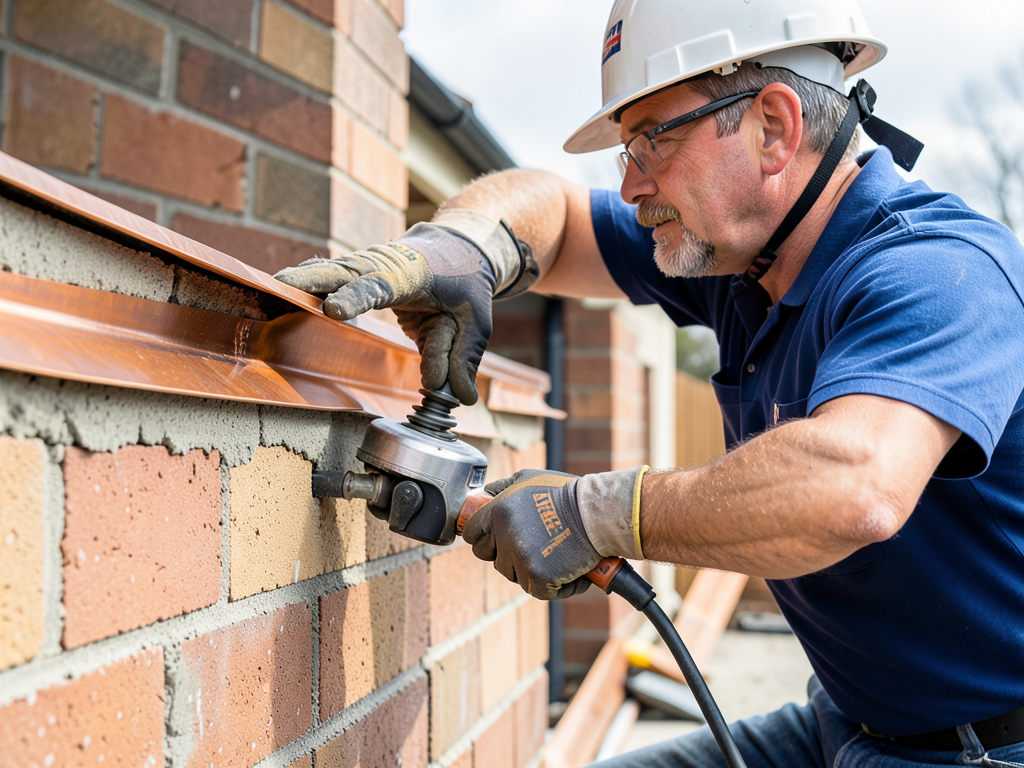
Traditional counter flashing installation involves cutting a horizontal groove (called a reglet) into the chimney brick using a diamond blade grinder. The metal is then inserted into this groove and sealed with high-temperature polyurethane caulk. This method provides superior protection compared to surface-mounted alternatives.
The Critical Intersection: Where Most Failures Occur
The most vulnerable point in any chimney flashing system is the intersection between step and counter flashing. In Nashville homes, we frequently find failed sealant at this junction, allowing water to track down the chimney’s interior. The freeze-thaw cycles common to Middle Tennessee cause this sealant to crack and separate within 5-7 years. EPA climate data for Middle Tennessee.
Another failure point occurs when step flashing is nailed directly to the chimney. This creates a stress point where thermal expansion causes the metal to fatigue and split. We’ve documented this failure pattern extensively in older East Nashville and 12 South homes built before modern flashing standards.
Material Selection for Middle Tennessee Conditions
Galvanized steel flashing typically lasts 15-20 years in Nashville’s climate before rust perforation begins. Aluminum offers better corrosion resistance but dents more easily during hail events. Copper flashing, while more expensive upfront, provides 50+ year service life and develops a protective patina that resists Middle Tennessee’s humidity.
For chimneys on the west-facing slopes of Nashville homes, we recommend copper flashing due to increased UV exposure and afternoon thunderstorm patterns. The darker patina also blends better with traditional brick chimneys common in Belle Meade and Green Hills neighborhoods.
Professional Installation Standards
According to the International Residential Code (IRC) Section R903.3, flashing must extend up the roof slope at least 4 inches and overlap the underlayment by 2 inches. The flashing must also be corrosion-resistant and compatible with roofing materials. In Davidson County, permit applications require detailed flashing diagrams showing step and counter flashing integration. International Residential Code Section R903.3.
Professional installation includes proper cricket installation for chimneys wider than 30 inches. A cricket diverts water around the chimney rather than allowing it to pool behind. This is especially critical for chimneys on the north side of roofs where ice damming can occur during Middle Tennessee’s occasional winter storms.
Diagnostic Testing: The Screwdriver Test
During our chimney flashing inspections, we use a simple diagnostic test. Insert a flathead screwdriver between the counter flashing and chimney brick. If the tool slides in easily or you feel movement, the sealant has failed. We also tap the flashing with a screwdriver handle – a hollow sound indicates separation from the substrate.
Another diagnostic involves checking for rust perforation using a magnet. If the magnet sticks but the metal feels thin or shows orange discoloration, the galvanizing has failed. This test works particularly well on galvanized steel flashing common in older Nashville homes.
Cost Comparison: Repair vs. Replacement
Step flashing repair typically costs $300-600 for localized damage, while complete chimney flashing replacement runs $1,200-2,500 depending on chimney height and material selection. Counter flashing replacement requires masonry work, adding $400-800 to the total cost. 24/7 Emergency Roof Repair.
Partial repairs often fail within 2-3 years as adjacent sections continue deteriorating. Full system replacement, while more expensive upfront, provides 15-25 year protection when installed with proper materials and techniques.
Common Nashville Chimney Configurations
Nashville’s architectural diversity creates unique flashing challenges. Victorian homes in East Nashville often feature multiple chimneys with complex roof intersections. Modern farmhouses in Mount Juliet typically have single large chimneys with simpler flashing requirements. The age of the home also matters – pre-1980s construction often lacks proper cricket installation.
Commercial buildings in the La Vergne industrial corridor present different challenges with larger, metal-clad chimneys requiring specialized sealing techniques. The flatter roof pitches common in commercial construction also affect water drainage patterns around flashing systems. Roofing La Vergne.
Maintenance Schedule for Optimal Performance
Annual inspection of chimney flashing prevents costly water damage. Check sealant integrity in spring after winter freeze-thaw cycles. Look for rust spots or paint deterioration on metal surfaces. Ensure counter flashing remains firmly embedded in mortar joints.
After major storm events, particularly those producing hail or high winds, inspect flashing for dents or displacement. Even small imperfections can become leak points during subsequent rainfall. The Cumberland River floodplain areas require extra vigilance due to higher humidity levels that accelerate corrosion.
When to Call a Professional
DIY flashing repairs often fail because homeowners lack proper tools and materials. Professional installation requires specialized grinders for reglet cutting, proper soldering equipment for copper joints, and high-temperature sealants rated for chimney applications.
Call a professional if you notice water stains on ceiling drywall near the chimney, rusted flashing visible from ground level, or separated counter flashing. These symptoms indicate system failure that requires immediate attention before interior water damage occurs.
Frequently Asked Questions
How long should chimney flashing last in Nashville?
Properly installed flashing using quality materials typically lasts 15-25 years in Nashville’s climate. Copper flashing can last 50+ years. Harsh weather, poor installation, or inferior materials can reduce lifespan to 5-10 years.
Can I just seal over damaged flashing?
Surface sealing is a temporary fix that usually fails within one season. Proper repair requires removing damaged flashing, inspecting underlying roof structure, and installing new flashing according to code requirements.
What’s the difference between flashing and waterproofing?
Flashing is a physical barrier system using metal components, while waterproofing typically refers to membrane systems or sealants. Both work together – flashing handles bulk water diversion while waterproofing provides secondary protection. Roofing Columbia.
Does chimney size affect flashing requirements?
Yes. Chimneys over 30 inches wide require a cricket to divert water. Taller chimneys need additional step flashing courses. Complex roof pitches may require custom-fabricated flashing pieces.
How do I know if my flashing is failing?
Look for water stains on ceilings near the chimney, rusted or missing flashing pieces, separated counter flashing, or daylight visible through flashing joints from the attic. These indicate immediate failure requiring repair.
Call (615) 640-4994 Today to Schedule Your Chimney Flashing Inspection
Don’t wait for water damage to appear inside your home. Our Nashville-based team specializes in proper step and counter flashing installation using materials proven to withstand Middle Tennessee’s climate. We provide detailed inspections, upfront pricing, and warranties on all flashing work. Call (615) 640-4994 now to protect your chimney before the next storm hits.
{
“@context”: “https://schema.org”,
“@type”: “BlogPosting”,
“headline”: “The Difference Between Step Flashing and Counter Flashing (and Why It Matters for Your Chimney)”,
“description”: “Learn the critical differences between step flashing and counter flashing for Nashville chimneys. Understand why proper installation prevents costly leaks in Middle Tennessee’s climate.”,
“wordCount”: 1427,
“datePublished”: “2026-06-07T13:40:00.000Z”,
“dateModified”: “2026-06-07T13:40:00.000Z”,
“inLanguage”: “en-US”,
“mainEntityOfPage”: {
“@type”: “WebPage”,
“@id”: “https://titanroofingnashville.com”
},
“publisher”: {
“@type”: “LocalBusiness”,
“name”: “Titan Roofing Nashville”,
“url”: “https://titanroofingnashville.com”
},
“author”: {
“@type”: “Organization”,
“name”: “Titan Roofing Nashville”,
“url”: “https://titanroofingnashville.com”
},
“image”: {
“@type”: “ImageObject”,
“url”: “https://titanroofingnashville.com/wp-content/uploads/2026/03/the-difference-between-step-flashing-and-counter-f-1.png”
}
}
{
“@context”: “https://schema.org”,
“@type”: “RoofingContractor”,
“name”: “Titan Roofing Nashville”,
“url”: “https://titanroofingnashville.com”,
“address”: {
“@type”: “PostalAddress”,
“addressLocality”: “Nashville”
},
“areaServed”: {
“@type”: “City”,
“name”: “Nashville”
}
}
{
“@context”: “https://schema.org”,
“@type”: “FAQPage”,
“mainEntity”: [
{
“@type”: “Question”,
“name”: “How long should chimney flashing last in Nashville?”,
“acceptedAnswer”: {
“@type”: “Answer”,
“text”: “Properly installed flashing using quality materials typically lasts 15-25 years in Nashville’s climate. Copper flashing can last 50+ years. Harsh weather, poor installation, or inferior materials can reduce lifespan to 5-10 years.”
}
},
{
“@type”: “Question”,
“name”: “Can I just seal over damaged flashing?”,
“acceptedAnswer”: {
“@type”: “Answer”,
“text”: “Surface sealing is a temporary fix that usually fails within one season. Proper repair requires removing damaged flashing, inspecting underlying roof structure, and installing new flashing according to code requirements.”
}
},
{
“@type”: “Question”,
“name”: “What’s the difference between flashing and waterproofing?”,
“acceptedAnswer”: {
“@type”: “Answer”,
“text”: “Flashing is a physical barrier system using metal components, while waterproofing typically refers to membrane systems or sealants. Both work together – flashing handles bulk water diversion while waterproofing provides secondary protection. Roofing Columbia.”
}
},
{
“@type”: “Question”,
“name”: “Does chimney size affect flashing requirements?”,
“acceptedAnswer”: {
“@type”: “Answer”,
“text”: “Yes. Chimneys over 30 inches wide require a cricket to divert water. Taller chimneys need additional step flashing courses. Complex roof pitches may require custom-fabricated flashing pieces.”
}
},
{
“@type”: “Question”,
“name”: “How do I know if my flashing is failing?”,
“acceptedAnswer”: {
“@type”: “Answer”,
“text”: “Look for water stains on ceilings near the chimney, rusted or missing flashing pieces, separated counter flashing, or daylight visible through flashing joints from the attic. These indicate immediate failure requiring repair.”
}
}
]
}
{
“@context”: “https://schema.org”,
“@type”: “BreadcrumbList”,
“itemListElement”: [
{
“@type”: “ListItem”,
“position”: 1,
“name”: “Home”,
“item”: “https://titanroofingnashville.com”
},
{
“@type”: “ListItem”,
“position”: 2,
“name”: “Blog”,
“item”: “https://titanroofingnashville.com/blog”
},
{
“@type”: “ListItem”,
“position”: 3,
“name”: “The Difference Between Step Flashing and Counter Flashing (and Why It Matters for Your Chimney)”
}
]
}
{
“@context”: “https://schema.org”,
“@type”: “Service”,
“serviceType”: “Roofing”,
“provider”: {
“@type”: “LocalBusiness”,
“name”: “Titan Roofing Nashville”,
“url”: “https://titanroofingnashville.com”
},
“areaServed”: {
“@type”: “City”,
“name”: “Nashville”
},
“description”: “Learn the critical differences between step flashing and counter flashing for Nashville chimneys. Understand why proper installation prevents costly leaks in Middle Tennessee’s climate.”
}