
The Dangers of Leaving Old Satellite Dishes Bolted to Your Roof in Berry Hill
Old satellite dishes bolted to your roof create serious problems that many Berry Hill homeowners overlook. Those metal brackets and lag bolts penetrate your roof decking and create entry points for water. Nashville’s heavy rainfall and humidity make these roof penetrations especially dangerous. Water finds its way through the smallest gaps and causes extensive damage inside your attic and walls before you even notice.
Berry Hill’s older homes built in the 1950s through 1970s often have multiple satellite installations from previous owners. Each dish leaves behind mounting hardware that compromises your roof’s integrity. The freeze-thaw cycles we experience in Middle Tennessee cause the bolts to expand and contract, widening the holes over time. This creates a perfect pathway for water infiltration during our spring thunderstorms and summer downpours.
Removing these old dishes requires more than just unscrewing the brackets. The holes left behind need proper sealing with roofing-grade materials to prevent leaks. Many homeowners who attempt DIY removal end up causing more damage by disturbing the surrounding shingles or using improper sealants that fail within months. The cost of fixing water damage far exceeds the price of professional removal and repair. EPA Electronics Donation and Recycling Guidelines.
Call (615) 640-4994 today to schedule your inspection. Our Berry Hill roofing specialists can safely remove old satellite equipment and restore your roof’s watertight seal before the next storm hits. Roofing La Vergne.
Why Those Old Satellite Mounts Are a Time Bomb
Satellite dish mounts create multiple problems beyond simple roof penetrations. The metal brackets trap moisture against your shingles, accelerating deterioration. In Berry Hill’s humid climate, this trapped moisture leads to algae growth and wood rot around the mounting points. The weight of the dish and bracket also creates stress points that can cause shingle cracking over time.
Many Berry Hill homes have asphalt shingles that become brittle after years of sun exposure. When you try to remove old satellite hardware from these aged shingles, they often break apart. This creates larger openings than the original bolt holes and requires extensive repairs. The problem compounds when previous installations used different mounting methods – some dishes used adhesive mounts while others used through-bolt systems. 24/7 Emergency Roof Repair.
The electrical wiring from old satellite systems also poses risks. Exposed coaxial cables can allow water to travel along the wire path and enter your attic. Rodents often chew on these old cables, creating additional entry points for moisture. The combination of physical penetrations and potential wiring issues makes these old installations a serious threat to your home’s structural integrity.
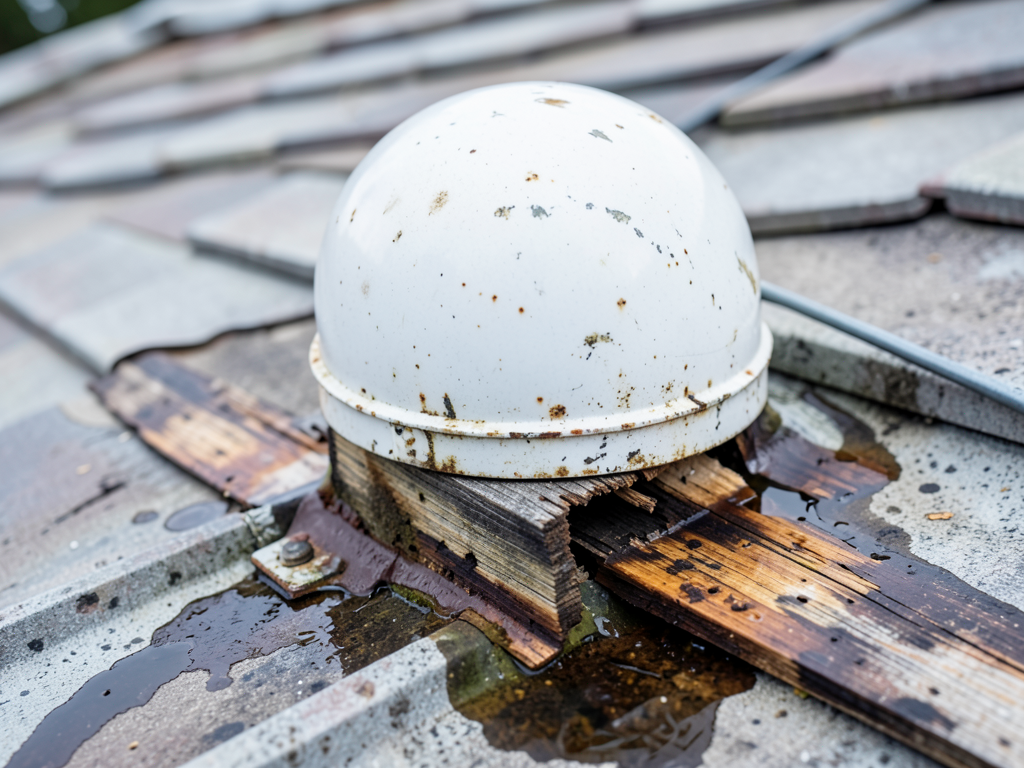
– Close-up photo showing water stains and wood rot around an old satellite mount on a Berry Hill roof
Step-by-Step Professional Satellite Dish Removal Process
Professional removal follows a specific process to prevent damage and ensure proper sealing. First, technicians inspect the roof around the mounting hardware to assess existing damage. They check for cracked shingles, deteriorated underlayment, and signs of previous water intrusion. This inspection determines whether simple sealing will suffice or if shingle replacement is necessary.
The removal process starts with disconnecting any remaining wiring. Technicians carefully cut and cap coaxial cables to prevent moisture migration. They then remove the mounting brackets using impact drivers with proper socket sizes. The lag bolts often require significant torque to break free, especially if they’ve been in place for years. Technicians work slowly to avoid tearing surrounding shingles.
After bracket removal, the next critical step involves cleaning the bolt holes. Technicians use wire brushes to remove debris and old sealant from the penetration points. They then apply roofing-grade polyurethane sealant or replace the affected shingles entirely. The choice depends on the hole size, shingle condition, and roof age. New sealant needs 24-48 hours to cure properly before exposure to water. Roofing Columbia.
- Initial Roof Inspection
Check for existing damage around mounting points and assess shingle condition.
- Electrical Disconnection
Cut and cap all coaxial cables to prevent moisture migration through wiring.
- Bracket and Bolt Removal
Remove mounting hardware using impact drivers, working slowly to prevent shingle damage.
- Hole Cleaning and Preparation
Wire brush penetration points to remove debris and old sealant materials.
- Professional Sealing
Apply roofing-grade polyurethane sealant or replace damaged shingles as needed.
Proper Sealing Techniques That Actually Work
Proper sealing requires materials specifically designed for roofing applications. Standard silicone caulk from hardware stores fails within months when exposed to UV rays and temperature extremes. Professional roofers use polyurethane sealants like Geocel 2300 or OSI Quad that maintain flexibility and adhesion for years. These products expand and contract with your roof without cracking or pulling away from the surface.
The sealing technique matters as much as the material. Technicians apply sealant in a continuous bead around each bolt hole, creating a watertight barrier. They then smooth the sealant to ensure complete coverage and proper adhesion to both the shingle surface and the penetration point. For larger holes or severely damaged areas, they may install new shingles or use flashing patches that integrate with the existing roof system.
Berry Hill’s climate demands extra attention to sealing details. Our high humidity and frequent rain mean any weakness in the seal gets tested quickly. Professional roofers often apply two layers of sealant for added protection – a base layer that fills the hole and a top layer that creates the weatherproof barrier. They also check the surrounding area for any additional vulnerabilities that might compromise the repair.

– Photo showing proper polyurethane sealant application around satellite mount holes with smooth finish
DIY vs Professional Removal: The Real Cost Analysis
DIY removal seems cheaper initially but often costs more in the long run. Basic tools for DIY removal include an impact driver ($100-150), ladder ($150-300), safety harness ($50-100), and sealant ($20-30). However, these tools don’t include the expertise needed to assess roof damage or apply proper sealing techniques. A single mistake can lead to thousands in water damage repairs. Expert Slate and Tile Roof Restoration in Belle Meade.
Professional removal typically costs $150-300 per mounting point in the Berry Hill area. This price includes inspection, safe removal, proper disposal of old equipment, and guaranteed sealing work. Most professional services offer warranties on their sealing work, providing peace of mind that DIY cannot match. The price difference becomes negligible when considering the potential costs of DIY mistakes.
Time is another factor many homeowners overlook. Professional teams complete most satellite dish removals in 1-2 hours. DIY projects often take an entire weekend as homeowners research techniques, purchase materials, and work carefully to avoid damage. The opportunity cost of your time, combined with the risk of improper sealing, makes professional service the smarter choice for most Berry Hill homeowners.
| Factor | DIY Removal | Professional Removal |
|---|---|---|
| Initial Cost | $300-500 (tools + materials) | $150-300 per mount |
| Time Required | 4-8 hours | 1-2 hours |
| Risk of Damage | High (shingle breakage, improper sealing) | Minimal (insured professionals) |
| Warranty/Guarantee | None | Typically 1-2 years |
| Insurance Coverage | None (homeowner liability) | Contractor insurance |
Local Disposal and Recycling Options in Davidson County
Proper disposal of old satellite equipment follows Davidson County’s e-waste guidelines. The Metro Nashville Public Works Department operates a Household Hazardous Waste Collection Facility at 630 Murfreesboro Pike where residents can drop off electronic waste including satellite receivers, dishes, and mounting hardware. This facility accepts items Monday through Saturday from 7:30 AM to 6:00 PM. Davidson County Household Hazardous Waste Collection Facility.
Several local recycling centers also accept satellite equipment. The Omohundro Convenience Center at 1019 Omohundro Place accepts electronics and metal components. Many Berry Hill residents find this location more convenient due to its proximity to I-65. Some satellite providers like DirecTV offer mail-back programs for their equipment, though mounting hardware typically must go through local recycling channels.
Before disposal, remove all personal information from satellite receivers. Perform factory resets to clear stored data and account information. The metal components of satellite dishes are recyclable, but the electronic components require special handling due to potential hazardous materials. Never place satellite equipment in regular trash bins as this violates Davidson County waste disposal regulations.
– Photo of the Davidson County Household Hazardous Waste Collection Facility drop-off area
Impact on Home Value and Curb Appeal
Old satellite dishes significantly impact your home’s curb appeal and market value. Real estate professionals in Berry Hill report that visible satellite equipment can reduce buyer interest and create negative first impressions. Modern buyers expect clean rooflines and often view old satellite hardware as a maintenance issue they’ll need to address immediately after purchase.
The Nashville real estate market shows strong preferences for well-maintained exteriors. Homes with clean, professional rooflines typically sell faster and command higher prices than those with visible mounting hardware or damaged shingles. During home inspections, old satellite mounts often trigger concerns about potential water damage, leading to repair requests or price negotiations that favor buyers.
Insurance companies also consider roof condition when determining premiums and coverage. Homes with compromised roof penetrations from old satellite mounts may face higher insurance rates or difficulty obtaining coverage. Some insurers require documentation of proper sealing for any roof penetrations before issuing or renewing policies. This creates another financial incentive for professional removal and repair.
Frequently Asked Questions
Who is responsible for removing old satellite dishes?
Typically the homeowner is responsible for removing old satellite equipment. Satellite providers usually only remove their equipment when you’re actively canceling service. Previous owners are not obligated to remove dishes they installed. However, some newer providers may offer removal services when installing upgraded equipment.
Can I just paint over the old satellite mount to hide it?
Painting over satellite mounts only hides the visual problem while leaving the water infiltration risk intact. Paint doesn’t create a waterproof seal and will peel or crack over time, potentially trapping moisture against your roof. Proper removal and sealing is the only safe solution.
How long does professional satellite dish removal take?
Most professional removals in Berry Hill take 1-2 hours for standard installations. Complex situations with multiple mounts, severe roof damage, or difficult access may require 3-4 hours. Weather conditions can also affect timing, as roof work requires dry conditions for proper sealing.
Will removing the satellite dish void my roof warranty?
Removing satellite dishes doesn’t void roof warranties, but improper removal or sealing can void specific sections related to workmanship or leaks. Professional removal using manufacturer-approved materials and techniques ensures your warranty remains intact. Always document the removal process for warranty purposes.
Don’t Wait Until Water Damage Appears
Water damage from old satellite mounts often goes unnoticed until it becomes severe. By the time you see water stains on your ceiling, the damage in your attic has likely been progressing for months or years. The combination of Berry Hill’s heavy rainfall and the hidden nature of roof leaks makes proactive removal essential.
Signs of existing damage include dark spots on ceilings, musty odors in upper rooms, or visible mold growth. However, many homeowners discover the problem only during home inspections or after major storms. The cost of emergency water damage repairs far exceeds the price of preventive satellite dish removal and proper sealing.
Middle Tennessee’s weather patterns create perfect conditions for roof leaks. Our spring thunderstorms dump large amounts of water in short periods, testing every roof penetration. Summer humidity keeps roofs wet for extended periods, allowing water to find even tiny entry points. Winter freeze-thaw cycles cause expanding ice to widen any existing gaps around old mounts.
Call (615) 640-4994 Today for Your Free Inspection
Protecting your Berry Hill home from water damage starts with addressing those old satellite dishes. Our experienced roofing technicians understand the specific challenges of Middle Tennessee weather and Berry Hill’s architectural styles. We provide free inspections to assess your roof’s condition and recommend the best course of action for satellite dish removal and repair.
Don’t let another storm season pass with those old mounts creating risks for your home. Our team works efficiently to minimize disruption while ensuring professional-quality results. We stand behind our work with warranties on all sealing and repair services. Whether you need one dish removed or multiple mounts addressed from previous owners, we have the expertise to handle the job safely.
Pick up the phone and call (615) 640-4994 before the next storm hits. Water damage doesn’t wait, and neither should you. Our Berry Hill roofing specialists are ready to protect your home with professional satellite dish removal and expert roof repair services you can trust.
{
“@context”: “https://schema.org”,
“@type”: “BlogPosting”,
“headline”: “The Dangers of Leaving Old Satellite Dishes Bolted to Your Roof in Berry Hill”,
“description”: “Discover why abandoned satellite dishes in Berry Hill cause roof leaks and water damage. Learn the risks of old mounts and how to properly remove them before the next Nashville storm.”,
“wordCount”: 2080,
“datePublished”: “2026-04-14T08:01:00.000Z”,
“dateModified”: “2026-04-14T08:01:00.000Z”,
“inLanguage”: “en-US”,
“mainEntityOfPage”: {
“@type”: “WebPage”,
“@id”: “https://titanroofingnashville.com”
},
“publisher”: {
“@type”: “LocalBusiness”,
“name”: “Titan Roofing Nashville”,
“url”: “https://titanroofingnashville.com”
},
“author”: {
“@type”: “Organization”,
“name”: “Titan Roofing Nashville”,
“url”: “https://titanroofingnashville.com”
},
“image”: {
“@type”: “ImageObject”,
“url”: “https://titanroofingnashville.com/wp-content/uploads/2026/03/the-dangers-of-leaving-old-satellite-dishes-bolted-1.png”
}
}
{
“@context”: “https://schema.org”,
“@type”: “RoofingContractor”,
“name”: “Titan Roofing Nashville”,
“url”: “https://titanroofingnashville.com”,
“address”: {
“@type”: “PostalAddress”,
“addressLocality”: “Nashville”
},
“areaServed”: {
“@type”: “City”,
“name”: “Nashville”
}
}
{
“@context”: “https://schema.org”,
“@type”: “FAQPage”,
“mainEntity”: [
{
“@type”: “Question”,
“name”: “Who is responsible for removing old satellite dishes?”,
“acceptedAnswer”: {
“@type”: “Answer”,
“text”: “Typically the homeowner is responsible for removing old satellite equipment. Satellite providers usually only remove their equipment when you’re actively canceling service. Previous owners are not obligated to remove dishes they installed. However, some newer providers may offer removal services when installing upgraded equipment.”
}
},
{
“@type”: “Question”,
“name”: “Can I just paint over the old satellite mount to hide it?”,
“acceptedAnswer”: {
“@type”: “Answer”,
“text”: “Painting over satellite mounts only hides the visual problem while leaving the water infiltration risk intact. Paint doesn’t create a waterproof seal and will peel or crack over time, potentially trapping moisture against your roof. Proper removal and sealing is the only safe solution.”
}
},
{
“@type”: “Question”,
“name”: “How long does professional satellite dish removal take?”,
“acceptedAnswer”: {
“@type”: “Answer”,
“text”: “Most professional removals in Berry Hill take 1-2 hours for standard installations. Complex situations with multiple mounts, severe roof damage, or difficult access may require 3-4 hours. Weather conditions can also affect timing, as roof work requires dry conditions for proper sealing.”
}
},
{
“@type”: “Question”,
“name”: “Will removing the satellite dish void my roof warranty?”,
“acceptedAnswer”: {
“@type”: “Answer”,
“text”: “Removing satellite dishes doesn’t void roof warranties, but improper removal or sealing can void specific sections related to workmanship or leaks. Professional removal using manufacturer-approved materials and techniques ensures your warranty remains intact. Always document the removal process for warranty purposes.”
}
}
]
}
{
“@context”: “https://schema.org”,
“@type”: “HowTo”,
“name”: “Professional Satellite Dish Removal Process”,
“step”: [
{
“@type”: “HowToStep”,
“position”: 1,
“name”: “Initial Roof Inspection”,
“text”: “Check for existing damage around mounting points and assess shingle condition.”
},
{
“@type”: “HowToStep”,
“position”: 2,
“name”: “Electrical Disconnection”,
“text”: “Cut and cap all coaxial cables to prevent moisture migration through wiring.”
},
{
“@type”: “HowToStep”,
“position”: 3,
“name”: “Bracket and Bolt Removal”,
“text”: “Remove mounting hardware using impact drivers, working slowly to prevent shingle damage.”
},
{
“@type”: “HowToStep”,
“position”: 4,
“name”: “Hole Cleaning and Preparation”,
“text”: “Wire brush penetration points to remove debris and old sealant materials.”
},
{
“@type”: “HowToStep”,
“position”: 5,
“name”: “Professional Sealing”,
“text”: “Apply roofing-grade polyurethane sealant or replace damaged shingles as needed.”
}
],
“image”: “https://titanroofingnashville.com/wp-content/uploads/2026/03/the-dangers-of-leaving-old-satellite-dishes-bolted-1.png”
}
{
“@context”: “https://schema.org”,
“@type”: “BreadcrumbList”,
“itemListElement”: [
{
“@type”: “ListItem”,
“position”: 1,
“name”: “Home”,
“item”: “https://titanroofingnashville.com”
},
{
“@type”: “ListItem”,
“position”: 2,
“name”: “Blog”,
“item”: “https://titanroofingnashville.com/blog”
},
{
“@type”: “ListItem”,
“position”: 3,
“name”: “The Dangers of Leaving Old Satellite Dishes Bolted to Your Roof in Berry Hill”
}
]
}
{
“@context”: “https://schema.org”,
“@type”: “Service”,
“serviceType”: “Roofing”,
“provider”: {
“@type”: “LocalBusiness”,
“name”: “Titan Roofing Nashville”,
“url”: “https://titanroofingnashville.com”
},
“areaServed”: {
“@type”: “City”,
“name”: “Nashville”
},
“description”: “Discover why abandoned satellite dishes in Berry Hill cause roof leaks and water damage. Learn the risks of old mounts and how to properly remove them before the next Nashville storm.”
}