
The Dangerous Way Leaves and Pine Needles Can Destroy Your Roof in Bellevue
Organic debris like leaves and pine needles may seem harmless but in Bellevue’s humid climate they become a silent threat to your roof’s integrity. When these materials accumulate in roof valleys and gutters they trap moisture creating the perfect environment for rot mold and eventual structural failure. The combination of Nashville’s 47 inches of annual rainfall and high humidity means debris stays wet longer accelerating damage that can cost thousands in repairs. 24/7 Emergency Roof Repair.
Why Roof Valleys Are Vulnerable in Bellevue
Roof valleys channel water from multiple slopes into a single path making them the most vulnerable area for debris buildup. In Bellevue’s wooded neighborhoods oak and maple leaves along with pine needles create thick mats that block water flow. When water cannot drain properly it seeps under shingles and flashing causing wood rot and ceiling leaks. The problem worsens during spring pollen season when seed pods and flower debris add to the blockage.
Call (615) 640-4994 today to schedule your inspection before the next storm hits.
Anatomy of a Roof Valley and Common Failure Points
Understanding valley construction helps explain why debris is so destructive. A typical valley contains three critical layers: the underlayment (ice and water shield), the flashing (metal or woven shingles), and the top shingle layer. When leaves trap moisture against these materials the underlayment degrades first. Rust forms on metal flashing while organic growth breaks down asphalt shingles. The International Residential Code requires ice and water shield in all valleys but even this barrier fails when constantly exposed to wet debris. Reliable Residential Roofers Serving East Nashville and Inglewood.

Diagram showing cross-section of a roof valley with underlayment, flashing, and shingle layers labeled. Arrows indicate water flow and debris accumulation points.
Seasonal Maintenance Timeline for Bellevue Homes
Bellevue’s four distinct seasons create different debris challenges throughout the year. Spring brings heavy pollen and seed pod accumulation that must be cleared before summer storms. Summer thunderstorms deposit twigs and small branches that can puncture underlayment. Fall creates the biggest hazard when oak and maple leaves blanket roofs for weeks. Winter ice storms turn debris into frozen dams that expand and contract damaging flashing.
Spring Maintenance (March-April)
- Remove pollen and seed pod buildup from valleys
- Check for winter damage from ice dams
- Inspect flashing for rust spots
- Clear gutters of winter debris
Fall Maintenance (October-November)
- Remove all leaf accumulation weekly during peak season
- Check for granule loss in valleys
- Inspect for moss or algae growth
- Ensure proper water flow in all valleys
Signs of Valley Failure Every Homeowner Should Know
Early detection prevents costly repairs. Look for these warning signs in your Bellevue home. Interior ceiling spots near exterior walls indicate water penetration through valley flashing. Granule accumulation in gutters shows shingle deterioration from constant moisture exposure. Rust streaks on metal flashing signal advanced corrosion that will soon fail. Moss or algae growth in valleys proves persistent moisture problems exist.
Professional inspection reveals what homeowners miss. Technicians use moisture meters to detect hidden water damage and infrared cameras to spot temperature variations indicating leaks. The National Roofing Contractors Association recommends annual valley inspections for homes in humid climates like Middle Tennessee. Roofing La Vergne.
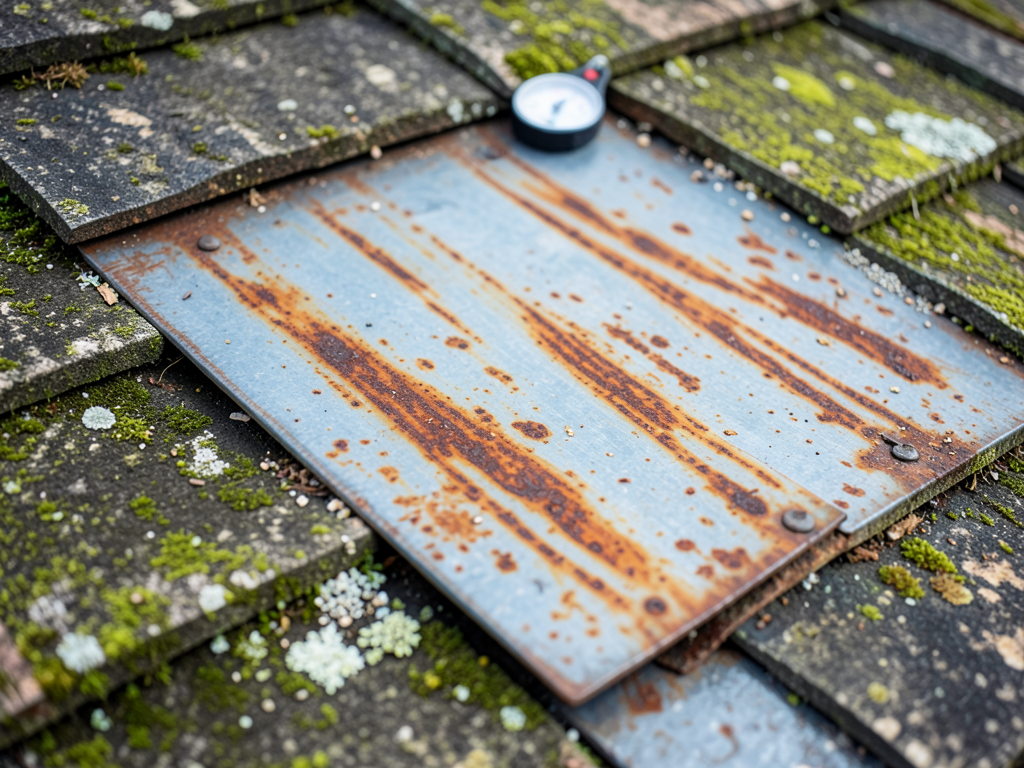
Photo showing rust streaks on metal valley flashing with surrounding shingles showing algae growth and granule loss.
DIY Cleaning vs. Professional Valley Maintenance
Many homeowners attempt debris removal themselves but this often causes more harm than good. Walking on wet roofs creates slip hazards and can damage shingles. Pressure washing forces water under flashing and removes protective granules. Chemical treatments can corrode metal components and harm surrounding landscaping.
Professional maintenance includes proper safety equipment, specialized tools, and knowledge of building codes. Technicians know how to clear debris without damaging materials and can identify early signs of failure. The cost of professional cleaning ($200-$500) pales compared to valley replacement ($1,500-$4,000) or interior water damage repairs that can exceed $10,000.
The Science Behind Organic Debris Damage
Leaves and pine needles create a perfect storm of destructive forces. As they decompose they generate heat that accelerates material breakdown. The acidic nature of decomposing organic matter corrodes metal flashing and breaks down asphalt adhesives. Moisture trapped by debris creates constant humidity that promotes mold and mildew growth.
Bellevue’s specific tree species create unique challenges. Pine needles contain resins that stick to surfaces and resist water flow. Oak leaves are thick and waxy, decomposing slowly and creating long-term moisture traps. Maple leaves are large and flat, forming dense mats that block water flow completely.
Long-Term Prevention Strategies
Beyond regular cleaning, several strategies protect your roof valleys. Installing metal valley guards prevents large debris from entering while allowing water flow. Gutter guards reduce the amount of material that reaches roof valleys. Proper tree trimming keeps overhanging branches from depositing debris.
Consider valley material upgrades for long-term protection. Copper flashing resists corrosion and naturally inhibits organic growth. PVC-coated valleys provide superior moisture barriers. Some homeowners install secondary drainage systems in problem areas.
Local Building Code Requirements
Davidson County follows the International Residential Code with specific amendments for Middle Tennessee’s climate. The code requires ice and water shield in all valleys with a minimum 24-inch width on each side. Metal flashing must be at least 0.019-inch thick galvanized steel or equivalent. These requirements ensure basic protection but do not address ongoing maintenance needs.
Commercial properties in Bellevue must comply with additional requirements including secondary drainage systems for low-slope roofs and enhanced wind resistance for buildings near open areas.
Cost Comparison: Prevention vs. Repair
The financial impact of neglecting valley maintenance becomes clear when comparing prevention costs to repair expenses. Annual professional cleaning costs $200-$500. Valley replacement runs $1,500-$4,000. Interior water damage repairs often exceed $10,000 when including drywall replacement, painting, and potential mold remediation.
Insurance may not cover damage from neglect. Most policies exclude damage resulting from lack of maintenance, leaving homeowners responsible for the full repair cost.
Before and after photo series showing a roof valley before cleaning (covered in leaves and debris) and after professional cleaning (clear valley with intact flashing).
Professional Inspection Process
A thorough valley inspection examines multiple components. Technicians check flashing attachment, underlayment integrity, and shingle condition. They measure moisture levels in surrounding decking and inspect attic areas for signs of water penetration. The inspection includes testing valley water flow by simulating rainfall conditions.
Documentation provides proof of roof condition for insurance purposes. Photos show current valley state and identify potential problem areas before they cause damage.
Emergency Response for Valley Failures
When valley leaks occur, immediate action prevents further damage. Temporary tarping protects the interior while permanent repairs are arranged. Water extraction and drying equipment prevent mold growth in affected areas. Insurance claims assistance helps navigate the repair process.
Emergency services operate 24/7 because valley failures often occur during severe weather when immediate repair is critical.
Environmental Factors Affecting Valley Longevity
Bellevue’s specific environmental conditions accelerate valley wear. High humidity levels keep debris wet for extended periods. Temperature fluctuations cause expansion and contraction that loosens flashing attachments. Air pollution deposits acidic compounds that accelerate metal corrosion.
Local wildlife can compound debris problems. Birds nest in valleys, adding organic material. Squirrels drop nuts and twigs that accumulate with leaves. These factors make regular maintenance even more critical in wooded areas.
Technology in Valley Maintenance
Modern inspection tools improve detection accuracy. Thermal imaging identifies temperature variations indicating moisture presence. Drone technology allows safe inspection of steep or difficult-to-access valleys. Moisture meters provide quantitative data about water content in roofing materials. Roofing Columbia.
Digital documentation creates maintenance histories that help predict future needs. This data-driven approach improves service quality and helps homeowners make informed decisions about roof maintenance investments.
Frequently Asked Questions
How often should roof valleys be cleaned in Bellevue?
Professional cleaning twice yearly is recommended, with additional cleaning during heavy leaf fall seasons. Homes with heavy tree coverage may need quarterly service.
Can I use a leaf blower to clean roof valleys?
Leaf blowers can damage shingles and push debris into flashing seams. Professional methods use specialized tools that remove debris without causing damage.
What’s the difference between open and closed valleys?
Open valleys use exposed metal flashing while closed valleys weave shingles across the valley. Both require regular maintenance, but open valleys show debris accumulation more clearly.
How do I know if my valley flashing needs replacement?
Signs include visible rust, separation from the roof deck, water stains on interior ceilings, and cracked or missing sealant. Professional inspection confirms the extent of damage.
Does homeowner’s insurance cover valley damage?
Insurance typically covers sudden damage from storms but not damage from neglect or lack of maintenance. Regular professional inspections provide documentation that supports insurance claims.
Conclusion
Leaves and pine needles represent a serious threat to your Bellevue home’s roof integrity. The combination of organic debris, Nashville’s humid climate, and the vulnerable nature of roof valleys creates conditions that lead to costly damage if left unaddressed. Regular professional maintenance, proper cleaning techniques, and early problem detection protect your investment and prevent emergency repairs.
Don’t wait for the first sign of a leak. The cost of prevention is always less than the cost of repair. Your roof protects everything inside your home, and the valleys are its most vulnerable point.
Pick up the phone and call (615) 640-4994 before the next storm hits. Professional valley inspection and cleaning takes just a few hours but can save you thousands in potential damage.
Additional Resources
Learn more about roof maintenance and local building requirements from these authoritative sources:
- National Roofing Contractors Association – Industry standards and best practices
- Tennessee Board for Licensing Contractors – Licensing requirements for roofing contractors
- FEMA – Emergency preparedness and disaster response information
{
“@context”: “https://schema.org”,
“@type”: “BlogPosting”,
“headline”: “The Dangerous Way Leaves and Pine Needles Can Destroy Your Roof in Bellevue”,
“description”: “Learn how organic debris like leaves and pine needles cause roof rot in Bellevue’s humid climate. Discover warning signs and prevention tips from local roofing experts.”,
“wordCount”: 1626,
“datePublished”: “2026-03-20T14:14:00.000Z”,
“dateModified”: “2026-03-20T14:14:00.000Z”,
“inLanguage”: “en-US”,
“mainEntityOfPage”: {
“@type”: “WebPage”,
“@id”: “https://titanroofingnashville.com”
},
“publisher”: {
“@type”: “LocalBusiness”,
“name”: “Titan Roofing Nashville”,
“url”: “https://titanroofingnashville.com”
},
“author”: {
“@type”: “Organization”,
“name”: “Titan Roofing Nashville”,
“url”: “https://titanroofingnashville.com”
},
“image”: {
“@type”: “ImageObject”,
“url”: “https://titanroofingnashville.com/wp-content/uploads/2026/03/the-dangerous-way-leaves-and-pine-needles-can-dest-1.png”
}
}
{
“@context”: “https://schema.org”,
“@type”: “RoofingContractor”,
“name”: “Titan Roofing Nashville”,
“url”: “https://titanroofingnashville.com”,
“address”: {
“@type”: “PostalAddress”,
“addressLocality”: “Nashville”
},
“areaServed”: {
“@type”: “City”,
“name”: “Nashville”
}
}
{
“@context”: “https://schema.org”,
“@type”: “FAQPage”,
“mainEntity”: [
{
“@type”: “Question”,
“name”: “How often should roof valleys be cleaned in Bellevue?”,
“acceptedAnswer”: {
“@type”: “Answer”,
“text”: “Professional cleaning twice yearly is recommended, with additional cleaning during heavy leaf fall seasons. Homes with heavy tree coverage may need quarterly service.”
}
},
{
“@type”: “Question”,
“name”: “Can I use a leaf blower to clean roof valleys?”,
“acceptedAnswer”: {
“@type”: “Answer”,
“text”: “Leaf blowers can damage shingles and push debris into flashing seams. Professional methods use specialized tools that remove debris without causing damage.”
}
},
{
“@type”: “Question”,
“name”: “What’s the difference between open and closed valleys?”,
“acceptedAnswer”: {
“@type”: “Answer”,
“text”: “Open valleys use exposed metal flashing while closed valleys weave shingles across the valley. Both require regular maintenance, but open valleys show debris accumulation more clearly.”
}
},
{
“@type”: “Question”,
“name”: “How do I know if my valley flashing needs replacement?”,
“acceptedAnswer”: {
“@type”: “Answer”,
“text”: “Signs include visible rust, separation from the roof deck, water stains on interior ceilings, and cracked or missing sealant. Professional inspection confirms the extent of damage.”
}
},
{
“@type”: “Question”,
“name”: “Does homeowner’s insurance cover valley damage?”,
“acceptedAnswer”: {
“@type”: “Answer”,
“text”: “Insurance typically covers sudden damage from storms but not damage from neglect or lack of maintenance. Regular professional inspections provide documentation that supports insurance claims.”
}
}
]
}
{
“@context”: “https://schema.org”,
“@type”: “BreadcrumbList”,
“itemListElement”: [
{
“@type”: “ListItem”,
“position”: 1,
“name”: “Home”,
“item”: “https://titanroofingnashville.com”
},
{
“@type”: “ListItem”,
“position”: 2,
“name”: “Blog”,
“item”: “https://titanroofingnashville.com/blog”
},
{
“@type”: “ListItem”,
“position”: 3,
“name”: “The Dangerous Way Leaves and Pine Needles Can Destroy Your Roof in Bellevue”
}
]
}
{
“@context”: “https://schema.org”,
“@type”: “Service”,
“serviceType”: “Roofing”,
“provider”: {
“@type”: “LocalBusiness”,
“name”: “Titan Roofing Nashville”,
“url”: “https://titanroofingnashville.com”
},
“areaServed”: {
“@type”: “City”,
“name”: “Nashville”
},
“description”: “Learn how organic debris like leaves and pine needles cause roof rot in Bellevue’s humid climate. Discover warning signs and prevention tips from local roofing experts.”
}