
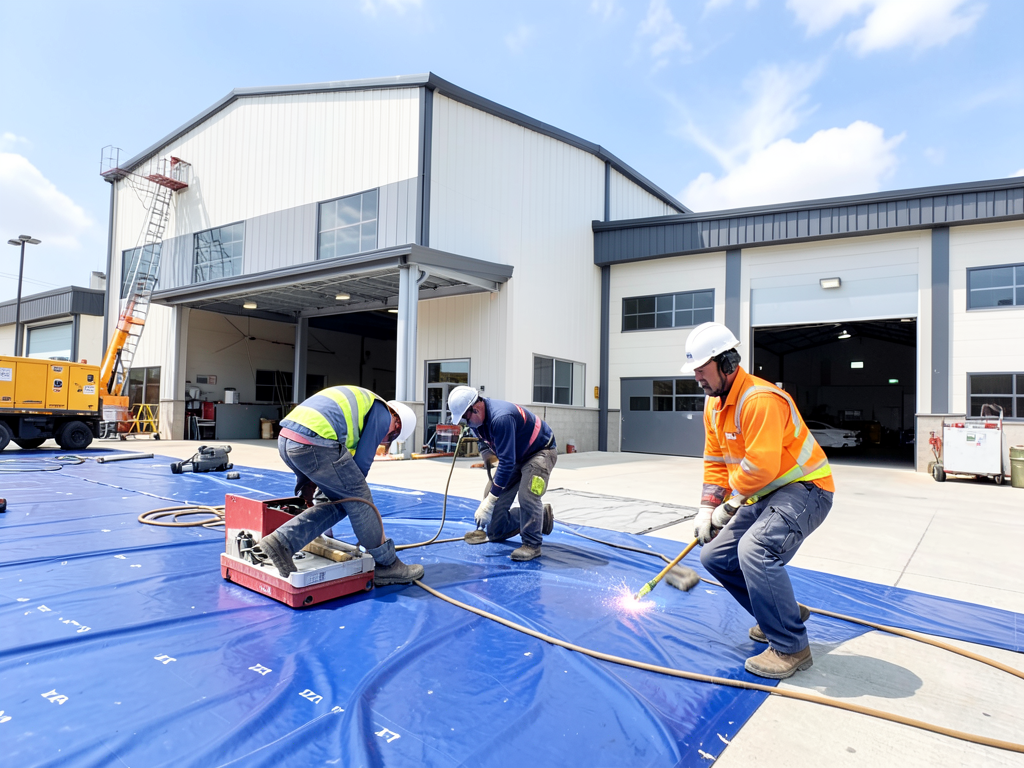
Professional TPO and EPDM Solutions for Nashville Commercial Properties
Commercial property owners in Nashville face unique challenges when selecting roofing materials for their flat or low-slope buildings. The combination of intense summer heat, high humidity, and severe storm systems common to Middle Tennessee creates specific performance demands that not all roofing membranes can meet. TPO and EPDM have emerged as two of the most reliable solutions for Nashville’s commercial properties, offering proven durability and energy efficiency in our local climate. Reliable Residential Roofers Serving East Nashville and Inglewood.
Choosing between TPO and EPDM requires understanding how each material performs under Nashville’s specific conditions. TPO (Thermoplastic Polyolefin) reflects sunlight and reduces cooling costs during our hot summers. EPDM (Ethylene Propylene Diene Terpolymer) provides exceptional flexibility and weather resistance during temperature swings. Both materials have been installed on countless Nashville warehouses, office buildings, and retail centers, with performance records that speak to their suitability for our region. Choosing Between Shingles and Metal for Your New Hendersonville Roof.
Understanding Nashville’s Climate Impact on Commercial Roofing
Nashville’s climate creates distinct challenges for commercial roofing systems. Our summers regularly see temperatures above 90°F with humidity levels exceeding 70%, placing extreme stress on roofing materials. The UV index in Middle Tennessee ranks among the highest in the Southeast, causing accelerated degradation of inferior roofing products. Roofing La Vergne.
Severe weather events pose additional risks. Nashville experiences an average of 48 thunderstorm days annually, with many producing hail, high winds, and heavy rainfall. The April 2020 tornado outbreak demonstrated how vulnerable commercial properties can be to extreme weather, with many flat-roof buildings suffering extensive damage from wind uplift and water intrusion.
Winter conditions create their own set of challenges. While Nashville doesn’t experience prolonged freezing temperatures, we do see frequent freeze-thaw cycles. These temperature fluctuations cause roofing materials to expand and contract, potentially compromising seams and flashings over time. The National Weather Service reports that Nashville averages 28 days per year with temperatures below freezing, creating conditions that test the flexibility and durability of commercial roofing systems.
Call (615) 640-4994 today to schedule your inspection.
TPO Roofing: Benefits and Applications for Nashville Properties
TPO roofing has become increasingly popular for Nashville commercial properties due to its energy efficiency and installation flexibility. This single-ply membrane consists of a thermoplastic polyolefin compound reinforced with polyester, creating a durable roofing surface that reflects up to 87% of solar radiation.
The energy savings potential for TPO in Nashville is significant. Buildings with TPO roofing typically see cooling cost reductions of 20-30% compared to dark-colored roofing materials. This translates to substantial operational savings, particularly for large warehouse facilities or distribution centers where roof square footage can exceed 100,000 square feet. Expert Slate and Tile Roof Restoration in Belle Meade.
TPO installation methods vary based on building requirements. Fully adhered systems provide superior wind resistance for buildings in exposed locations. Mechanically fastened systems offer cost-effective solutions for standard applications. Ballasted systems work well for buildings where roof penetrations are minimal and weight loads can be accommodated.
Material thickness options range from 45 to 80 mils, with thicker membranes providing extended service life in Nashville’s harsh climate. The 60-mil thickness has become the standard for most commercial applications in the area, balancing initial cost with long-term performance expectations of 20-25 years.
The Cool Roof Rating Council has certified many TPO products for their high solar reflectance and thermal emittance, making them eligible for energy efficiency tax credits under the current federal program.
EPDM Roofing: Durability and Performance in Middle Tennessee
EPDM roofing offers distinct advantages for Nashville commercial properties, particularly those requiring exceptional weather resistance and flexibility. This synthetic rubber membrane has been installed on buildings throughout Middle Tennessee for over four decades, proving its reliability in our specific climate conditions.
The material’s molecular structure provides inherent resistance to ozone, UV radiation, and extreme temperature fluctuations. EPDM maintains flexibility at temperatures as low as -40°F and can withstand surface temperatures exceeding 180°F without cracking or becoming brittle. This wide temperature tolerance proves particularly valuable during Nashville’s rapid weather changes.
EPDM installation typically involves fully adhered or mechanically fastened methods. The material comes in large sheets up to 50 feet wide, reducing the number of seams compared to other single-ply systems. This characteristic minimizes potential leak points and simplifies maintenance over the roof’s service life.
Standard EPDM thickness ranges from 45 to 90 mils, with the 60-mil thickness being most common for commercial applications in Nashville. The material’s dark color absorbs heat, which can be advantageous for buildings requiring snow melt capabilities or those in colder microclimates within Middle Tennessee. Solving Common Flat Roof Leaks for Downtown Nashville Condos.
EPDM’s proven track record in Nashville includes successful installations on buildings dating back to the 1980s. Many of these original installations continue to perform well beyond their expected 20-year service life, demonstrating the material’s exceptional durability when properly maintained.
Comparative Analysis: TPO vs EPDM for Nashville Commercial Buildings
Selecting between TPO and EPDM requires evaluating multiple factors specific to each commercial property. The following comparison examines key performance characteristics that matter most for Nashville buildings.
| Characteristic | TPO | EPDM |
|---|---|---|
| Initial Cost per Square Foot | $5.50 – $7.50 | $4.50 – $6.50 |
| Energy Efficiency (Cooling) | Excellent (Reflects 85-87% solar) | Poor (Absorbs 85-90% solar) |
| Flexibility in Cold Weather | Good to Excellent | Excellent |
| Seam Strength | Heat-welded, very strong | Adhesive or tape, good |
| Expected Service Life in Nashville | 20-25 years | 25-30 years |
| Resistance to Punctures | Moderate | Excellent |
| Installation Speed | Fast (heat welding) | Moderate (adhesive curing) |
The decision between TPO and EPDM often comes down to specific building requirements and operational priorities. Properties with high cooling demands or those seeking LEED certification typically benefit from TPO’s superior energy efficiency. Buildings requiring maximum durability or those with minimal cooling needs may find EPDM more cost-effective over the long term.
Environmental considerations also play a role in material selection. TPO’s reflective properties reduce the urban heat island effect, while EPDM’s longer service life means less frequent replacement and reduced waste. Both materials are recyclable at the end of their service life, though recycling infrastructure varies by location.
Local building codes in Nashville and surrounding Davidson County have specific requirements for commercial roofing systems. The Metro Nashville Codes Department mandates minimum fire ratings, wind uplift resistance, and energy efficiency standards that both TPO and EPDM can meet when properly specified.
Installation Best Practices for Nashville Commercial Properties
Successful TPO or EPDM installation requires adherence to manufacturer specifications and local building codes. The installation process begins with thorough roof deck preparation, ensuring the substrate is clean, dry, and structurally sound. Any existing roofing materials must be evaluated for removal or compatibility with the new system.
Insulation selection plays a critical role in system performance. Nashville’s climate requires insulation with appropriate R-values to meet energy code requirements while providing sufficient compressive strength to support foot traffic and equipment loads. Common insulation materials include polyisocyanurate, extruded polystyrene, and high-density wood fiber boards.
Flashing details require particular attention in Nashville’s climate. Expansion joints, pitch pockets, and curb flashings must accommodate thermal movement while maintaining watertight integrity. The use of compatible adhesives and sealants ensures long-term performance of these critical transition areas.
Field seams represent potential failure points if not properly executed. TPO seams require precise temperature control during welding to achieve optimal bond strength. EPDM seams demand clean surfaces and proper adhesive application techniques. Quality control inspections during installation verify seam integrity through visual examination and, when required, destructive testing.
Roof penetrations for HVAC units, vents, and other equipment require specialized detailing. These areas experience concentrated stress and must be reinforced to prevent membrane fatigue. Cricket installation behind large equipment prevents water ponding and ensures proper drainage across the roof surface.
The National Roofing Contractors Association provides detailed installation guidelines that exceed minimum code requirements, offering best practices for achieving maximum system longevity in challenging climates like Nashville’s.
Maintenance Requirements for Long-Term Performance
Regular maintenance extends the service life of both TPO and EPDM roofing systems while preventing costly repairs. Nashville’s climate creates specific maintenance needs that differ from other regions due to our combination of heat, humidity, and severe weather exposure.
Semi-annual inspections form the foundation of effective maintenance programs. Spring inspections identify winter damage from freeze-thaw cycles and prepare the roof for summer heat. Fall inspections address summer wear and prepare for winter conditions. These inspections should include detailed documentation with photographs to track roof condition over time.
Debris removal prevents drainage problems that can lead to ponding water. Nashville’s many trees shed leaves, twigs, and seeds that accumulate in roof valleys and around equipment. Standing water accelerates membrane degradation and creates conditions favorable for algae and moss growth, which can compromise roofing materials.
Seam and flashing inspections identify potential failure points before leaks develop. TPO seams may show signs of delamination or contamination that weakens the weld. EPDM seams can exhibit adhesive failure or shrinkage that creates gaps. Early detection allows for economical repairs rather than extensive replacement.
Ponding water areas require immediate attention. Nashville receives an average of 47 inches of rainfall annually, with intense storms capable of overwhelming drainage systems. Areas holding water for more than 48 hours need evaluation for underlying structural issues or surface irregularities that prevent proper drainage.
Membrane cleaning removes environmental contaminants that degrade roofing materials. Industrial facilities in Nashville’s manufacturing corridors may experience chemical fallout that requires specialized cleaning procedures. Standard cleaning involves low-pressure washing with appropriate cleaning solutions that won’t damage the roofing membrane.
Professional maintenance programs typically include priority service for emergency repairs, extended warranty coverage, and detailed reporting that helps facility managers budget for future roof replacement. The cost of preventive maintenance typically ranges from $0.10 to $0.20 per square foot annually, representing a small investment compared to the cost of premature roof failure.
Energy Efficiency and Environmental Considerations
Energy efficiency represents a significant consideration for Nashville commercial property owners, particularly given our long cooling season and rising energy costs. Both TPO and EPDM roofing systems offer opportunities for improving building energy performance, though through different mechanisms.
TPO’s high solar reflectance directly reduces cooling loads by minimizing heat absorption through the roof assembly. This characteristic makes TPO particularly valuable for buildings with high internal heat gains or those located in Nashville’s urban core where heat island effects are most pronounced. The energy savings can be quantified through building energy modeling, with typical reductions of 15-25% in cooling energy consumption.
EPDM’s dark surface absorbs solar radiation, which can be advantageous for certain building types. Facilities requiring snow melt capabilities or those with significant winter heating demands may benefit from EPDM’s heat absorption characteristics. The material’s excellent insulation properties also contribute to overall building energy performance.
Both materials qualify for various energy efficiency incentives. The federal government offers tax deductions for commercial buildings meeting specific energy performance criteria. Nashville Electric Service provides rebates for energy-efficient roofing upgrades on qualifying commercial properties. These incentives can offset 10-20% of the initial roofing investment.
Environmental considerations extend beyond energy performance. Both TPO and EPDM manufacturing processes have improved significantly in recent years, with reduced volatile organic compound emissions and increased use of recycled materials. The materials themselves are recyclable at the end of their service life, though recycling infrastructure varies by region.
Stormwater management represents another environmental consideration. Cool roofing surfaces like TPO reduce the urban heat island effect, while proper drainage design prevents localized flooding during Nashville’s intense rainfall events. Some commercial properties incorporate rainwater harvesting systems that collect runoff from roofing surfaces for landscape irrigation or other non-potable uses.
The EPA’s WaterSense program provides guidelines for commercial properties seeking to optimize their water management practices, including considerations for roofing system selection and maintenance.
Cost Considerations and Return on Investment
Commercial roofing investments require careful financial analysis to ensure optimal return on investment. TPO and EPDM systems offer different cost structures and performance characteristics that affect long-term economics for Nashville property owners.
Initial installation costs vary based on material selection, system complexity, and building characteristics. TPO systems typically cost 10-15% more than comparable EPDM installations due to material costs and installation requirements. However, TPO’s energy efficiency benefits can offset this initial premium within 3-5 years for buildings with high cooling demands.
Life cycle costing provides a more accurate comparison than initial cost alone. A 20-year analysis might reveal that TPO’s lower energy costs and reduced maintenance requirements make it more economical than EPDM, despite the higher upfront investment. Factors affecting life cycle costs include energy prices, maintenance requirements, repair frequency, and disposal costs.
Insurance considerations also impact roofing economics. Some insurance providers offer premium discounts for buildings with high-performance roofing systems that reduce the risk of storm damage or water intrusion. The April 2020 tornado outbreak in Nashville demonstrated how proper roofing selection can minimize damage during severe weather events, potentially reducing insurance claims and maintaining coverage availability.
Property value implications extend beyond direct cost considerations. Energy-efficient buildings command premium rents in the commercial market, particularly in Nashville’s growing office and industrial sectors. Buildings with documented energy performance and maintenance histories attract higher-quality tenants and experience lower vacancy rates.
Financing options have expanded for energy-efficient roofing upgrades. Property Assessed Clean Energy (PACE) programs allow commercial property owners to finance roofing improvements through property tax assessments, spreading costs over 10-20 years while the building benefits from immediate energy savings and improved performance.
Maintenance contracts represent a predictable cost component that affects overall system economics. Professional maintenance programs typically cost $0.10 to $0.20 per square foot annually but can extend roof life by 5-10 years while preventing costly emergency repairs. The cost-benefit analysis often shows maintenance returns of 300-500% over the roof’s service life.
Local Building Code Requirements and Compliance
Nashville and Davidson County have specific building code requirements that govern commercial roofing installations. Understanding these requirements ensures compliance while optimizing system performance for our local conditions.
The Metro Nashville Codes Department has adopted the 2018 International Building Code with local amendments that affect commercial roofing specifications. These amendments address wind uplift requirements, fire ratings, and energy efficiency standards specific to Middle Tennessee’s climate and construction practices.
Wind uplift resistance represents a critical code requirement given Nashville’s exposure to severe thunderstorms and occasional tropical storm remnants. The code mandates specific attachment methods and fastener patterns based on building height, location, and exposure category. Buildings in exposed locations or those exceeding certain height thresholds require additional reinforcement to meet these requirements.
Fire ratings affect material selection for buildings near property lines or those with specific occupancy classifications. Both TPO and EPDM can achieve Class A fire ratings when installed with appropriate underlayments and meeting specific installation requirements. The code also addresses fire stopping at roof penetrations and parapets to prevent vertical fire spread.
Energy efficiency requirements continue to evolve, with the current code mandating specific thermal performance levels for commercial roofing systems. These requirements vary based on building type, location within the city, and whether the building is new construction or a replacement. Compliance typically involves demonstrating insulation R-values and, for cool roofing materials, verifying solar reflectance and thermal emittance ratings.
Permit requirements include detailed submittal documents showing roof plans, material specifications, and installation methods. The permit process involves plan review by code officials to verify compliance before work begins. Inspections during and after installation verify that the completed work meets code requirements and manufacturer specifications.
Special requirements apply to buildings in historic districts or those with specific architectural considerations. The Capitol View and Five Points historic districts have additional review processes that may affect roofing material selection or installation methods to maintain architectural compatibility while meeting modern performance standards.
Frequently Asked Questions
How long do TPO and EPDM roofs typically last in Nashville?
TPO roofs in Nashville typically last 20-25 years with proper maintenance, while EPDM systems often exceed 25-30 years. The actual service life depends on installation quality, maintenance practices, and specific building conditions. Buildings in industrial areas may experience shorter lifespans due to chemical exposure or increased foot traffic.
Which material is better for energy efficiency in Nashville’s climate?
TPO offers superior energy efficiency for Nashville’s hot summers, reflecting up to 87% of solar radiation and reducing cooling costs by 20-30%. EPDM absorbs heat, which can increase cooling costs but may benefit buildings requiring snow melt or those with high winter heating demands. The best choice depends on your building’s specific energy profile.
What maintenance is required for commercial flat roofs in Nashville?
Nashville commercial roofs require semi-annual inspections, debris removal, seam and flashing checks, and drainage system maintenance. Spring and fall inspections are particularly important to prepare for summer heat and winter conditions. Professional maintenance programs cost $0.10-0.20 per square foot annually but can extend roof life by 5-10 years.
Are there energy efficiency incentives for commercial roofing in Nashville?
Yes, both federal tax deductions and Nashville Electric Service rebates are available for qualifying energy-efficient roofing systems. TPO’s reflective properties often qualify for these incentives, which can offset 10-20% of installation costs. Property Assessed Clean Energy (PACE) financing is also available for qualifying commercial properties.
How do Nashville’s building codes affect commercial roofing choices?
Metro Nashville Codes Department requires specific wind uplift resistance, fire ratings, and energy efficiency standards for commercial roofing. Both TPO and EPDM can meet these requirements when properly specified and installed. Permit requirements include detailed submittal documents and inspections to verify code compliance.
Making the Right Choice for Your Nashville Commercial Property
Selecting between TPO and EPDM for your Nashville commercial property requires evaluating multiple factors beyond initial cost. Building usage patterns, energy costs, maintenance capabilities, and long-term ownership plans all influence the optimal material selection for your specific situation.
Properties with high cooling demands, those seeking LEED certification, or buildings in Nashville’s urban core often benefit from TPO’s energy efficiency and modern appearance. Warehouses, industrial facilities, and buildings with minimal cooling needs may find EPDM’s durability and lower initial cost more aligned with their operational requirements.
Professional roofing contractors with local experience can provide detailed analyses comparing material options for your specific building. These analyses should include energy modeling, life cycle cost comparisons, and documentation of code compliance to support informed decision-making.
The investment in quality commercial roofing pays dividends through reduced energy costs, minimized maintenance requirements, and protection of building contents and operations. In Nashville’s challenging climate, the right roofing system serves as a critical asset that supports business operations while managing long-term facility costs.
Call (615) 640-4994 today to schedule your inspection.
Don’t wait until a minor issue becomes a major problem. Nashville’s weather patterns create specific challenges for commercial roofing systems, and early intervention prevents costly repairs and business interruptions. Our team understands the unique requirements of Middle Tennessee’s climate and can recommend the optimal roofing solution for your commercial property.
Whether you need emergency repairs, routine maintenance, or complete roof replacement, we bring the expertise and local knowledge necessary to protect your investment. Contact us today to learn how professional TPO or EPDM roofing can improve your building’s performance while reducing long-term operating costs.
{
“@context”: “https://schema.org”,
“@type”: “BlogPosting”,
“headline”: “Professional TPO and EPDM Solutions for Nashville Commercial Properties”,
“description”: “Expert TPO and EPDM roofing installation and repair for Nashville commercial properties. Learn about material benefits, local climate performance, and code compliance for flat roofs.”,
“wordCount”: 3168,
“datePublished”: “2026-03-05T16:26:00.000Z”,
“dateModified”: “2026-03-05T16:26:00.000Z”,
“inLanguage”: “en-US”,
“mainEntityOfPage”: {
“@type”: “WebPage”,
“@id”: “https://titanroofingnashville.com”
},
“publisher”: {
“@type”: “LocalBusiness”,
“name”: “Titan Roofing Nashville”,
“url”: “https://titanroofingnashville.com”
},
“author”: {
“@type”: “Organization”,
“name”: “Titan Roofing Nashville”,
“url”: “https://titanroofingnashville.com”
},
“image”: {
“@type”: “ImageObject”,
“url”: “https://titanroofingnashville.com/wp-content/uploads/2026/03/professional-tpo-and-epdm-solutions-for-nashville-1.png”
}
}
{
“@context”: “https://schema.org”,
“@type”: “RoofingContractor”,
“name”: “Titan Roofing Nashville”,
“url”: “https://titanroofingnashville.com”,
“address”: {
“@type”: “PostalAddress”,
“addressLocality”: “Nashville”
},
“areaServed”: {
“@type”: “City”,
“name”: “Nashville”
}
}
{
“@context”: “https://schema.org”,
“@type”: “FAQPage”,
“mainEntity”: [
{
“@type”: “Question”,
“name”: “How long do TPO and EPDM roofs typically last in Nashville?”,
“acceptedAnswer”: {
“@type”: “Answer”,
“text”: “TPO roofs in Nashville typically last 20-25 years with proper maintenance, while EPDM systems often exceed 25-30 years. The actual service life depends on installation quality, maintenance practices, and specific building conditions. Buildings in industrial areas may experience shorter lifespans due to chemical exposure or increased foot traffic.”
}
},
{
“@type”: “Question”,
“name”: “Which material is better for energy efficiency in Nashville’s climate?”,
“acceptedAnswer”: {
“@type”: “Answer”,
“text”: “TPO offers superior energy efficiency for Nashville’s hot summers, reflecting up to 87% of solar radiation and reducing cooling costs by 20-30%. EPDM absorbs heat, which can increase cooling costs but may benefit buildings requiring snow melt or those with high winter heating demands. The best choice depends on your building’s specific energy profile.”
}
},
{
“@type”: “Question”,
“name”: “What maintenance is required for commercial flat roofs in Nashville?”,
“acceptedAnswer”: {
“@type”: “Answer”,
“text”: “Nashville commercial roofs require semi-annual inspections, debris removal, seam and flashing checks, and drainage system maintenance. Spring and fall inspections are particularly important to prepare for summer heat and winter conditions. Professional maintenance programs cost $0.10-0.20 per square foot annually but can extend roof life by 5-10 years.”
}
},
{
“@type”: “Question”,
“name”: “Are there energy efficiency incentives for commercial roofing in Nashville?”,
“acceptedAnswer”: {
“@type”: “Answer”,
“text”: “Yes, both federal tax deductions and Nashville Electric Service rebates are available for qualifying energy-efficient roofing systems. TPO’s reflective properties often qualify for these incentives, which can offset 10-20% of installation costs. Property Assessed Clean Energy (PACE) financing is also available for qualifying commercial properties.”
}
},
{
“@type”: “Question”,
“name”: “How do Nashville’s building codes affect commercial roofing choices?”,
“acceptedAnswer”: {
“@type”: “Answer”,
“text”: “Metro Nashville Codes Department requires specific wind uplift resistance, fire ratings, and energy efficiency standards for commercial roofing. Both TPO and EPDM can meet these requirements when properly specified and installed. Permit requirements include detailed submittal documents and inspections to verify code compliance.”
}
}
]
}
{
“@context”: “https://schema.org”,
“@type”: “BreadcrumbList”,
“itemListElement”: [
{
“@type”: “ListItem”,
“position”: 1,
“name”: “Home”,
“item”: “https://titanroofingnashville.com”
},
{
“@type”: “ListItem”,
“position”: 2,
“name”: “Blog”,
“item”: “https://titanroofingnashville.com/blog”
},
{
“@type”: “ListItem”,
“position”: 3,
“name”: “Professional TPO and EPDM Solutions for Nashville Commercial Properties”
}
]
}
{
“@context”: “https://schema.org”,
“@type”: “Service”,
“serviceType”: “Roofing”,
“provider”: {
“@type”: “LocalBusiness”,
“name”: “Titan Roofing Nashville”,
“url”: “https://titanroofingnashville.com”
},
“areaServed”: {
“@type”: “City”,
“name”: “Nashville”
},
“description”: “Expert TPO and EPDM roofing installation and repair for Nashville commercial properties. Learn about material benefits, local climate performance, and code compliance for flat roofs.”
}