
How to Identify Rotted Roof Decking Before You Commit to a Full Replacement
Rotted roof decking can turn a simple repair into a major renovation. In Nashville’s humid climate, wood rot develops faster than many homeowners realize. This guide walks you through the warning signs that indicate your decking needs attention before you commit to a full replacement. EPA moisture control guidelines.
What is Roof Decking and Why Does it Rot?
Roof decking forms the structural foundation beneath your shingles. Most Nashville homes use either oriented strand board (OSB) or plywood sheathing. These materials absorb moisture through roof leaks, poor attic ventilation, or ice damming. Once water penetrates the surface, wood fibers break down through fungal growth and delamination.. Read more about Plywood vs OSB Roof Decking for Long Term Stability in Nashville.
Middle Tennessee’s high humidity accelerates this process. When attic temperatures reach 130°F in summer, trapped moisture creates perfect conditions for rot. The International Residential Code (IRC) requires minimum 7/16-inch decking thickness, but compromised material loses structural integrity long before code violations appear. International Residential Code requirements.
Exterior Signs You Can See From the Ground
Sagging rooflines often indicate rotted decking underneath. Walk to the street and look for wavy or uneven shingle patterns. These dips occur when water-damaged wood compresses under its own weight. Pay special attention to areas near chimneys, skylights, and roof valleys where flashing failures concentrate moisture.
Missing or curled shingles create entry points for water. However, the real damage happens beneath the surface. By the time you see visible exterior signs, the decking may already be compromised across multiple sheets.
Attic Inspections: Finding Rot from the Inside
Dark water stains on rafters signal active leaks. White or black mold growth indicates chronic moisture problems. The most telling sign is light peeking through nail holes or gaps in the decking. This means the wood has deteriorated enough to create actual holes.
Attic rain occurs when warm, moist air condenses on cold roof surfaces. This creates a persistent moisture source that feeds rot. Check for rusty nails protruding through decking – these indicate water has been present long enough to corrode metal fasteners.
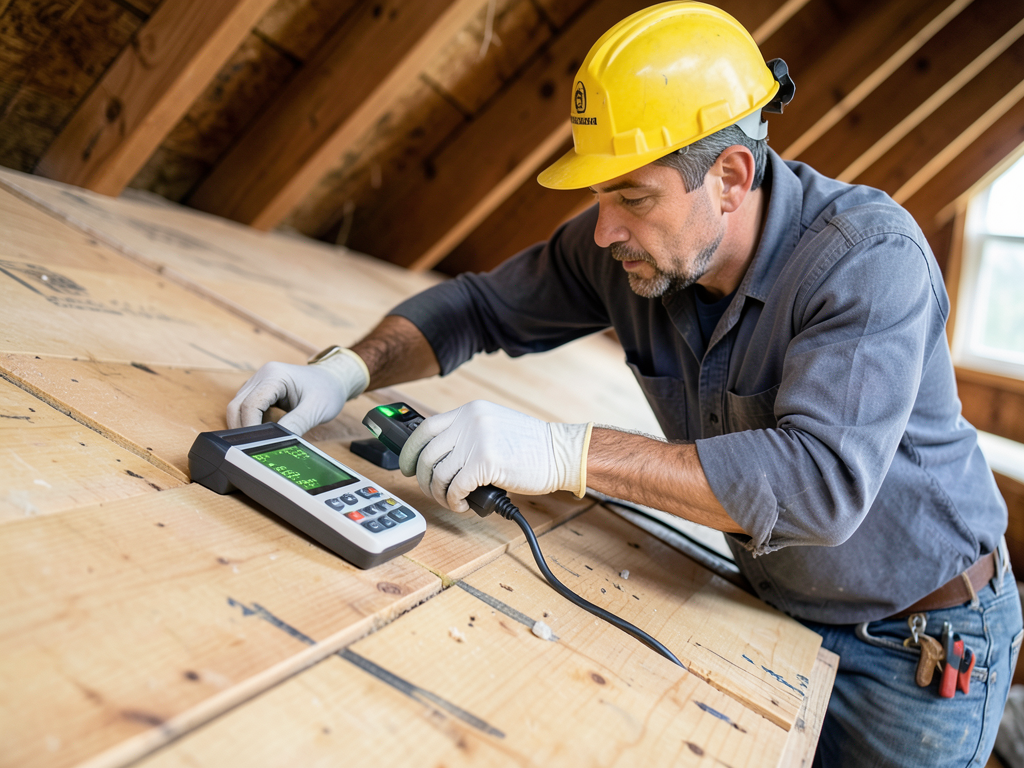
Diagram showing attic inspection points for detecting rotted decking, including moisture meter placement and visual inspection areas.
The ‘Sponginess’ Test
Professional roofers use the screwdriver test to check decking integrity. Press a screwdriver into the wood surface. Healthy decking resists penetration. Rotted wood allows the screwdriver to sink in easily, feeling spongy or crumbly.
The walk test reveals soft spots. Step carefully across your roof (only if it’s safe and you have proper equipment). Areas with rotted decking feel noticeably softer underfoot. This method requires caution – walking on compromised decking risks falling through.
Nashville Climate Factors
Nashville’s climate creates unique challenges for roof decking. Our average humidity exceeds 70% during summer months. When combined with poor attic ventilation, this creates a greenhouse effect that traps moisture against wood surfaces.
Spring thunderstorms dump 5+ inches of rain monthly. Water finds the smallest vulnerabilities in flashing or underlayment. The freeze-thaw cycles in January and February cause expansion cracks that widen over time, allowing more water infiltration.
East Nashville’s historic homes often lack modern ventilation systems. Their enclosed attics become moisture traps. In contrast, newer developments in Mount Juliet typically incorporate ridge vents and soffit ventilation that reduce rot risk.
The Cost of Delay: Repair vs. Replacement
Spot repairs cost $150-300 per sheet in the Nashville market. Full decking replacement runs $3-5 per square foot depending on material and accessibility. The decision point comes when rot affects more than 30% of your roof area. 24/7 Emergency Roof Repair.
Structural failure represents the worst-case scenario. Rotted decking can collapse under snow loads or during maintenance work. Insurance typically covers sudden damage but excludes long-term rot, considering it a maintenance issue.
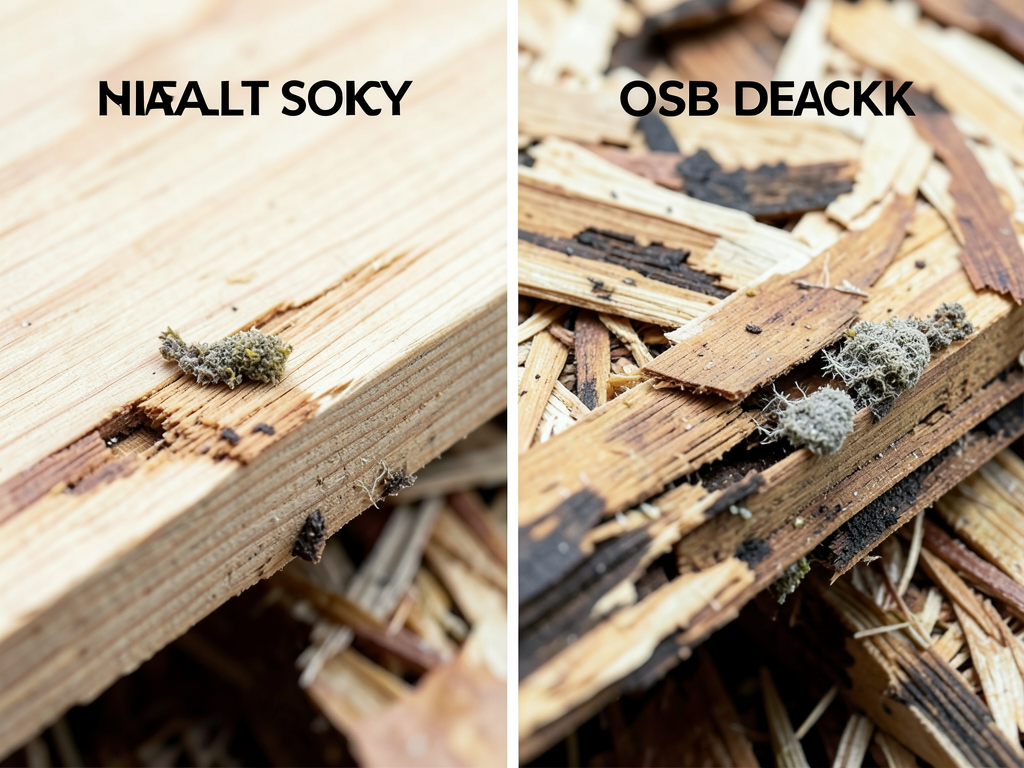
Photo showing comparison between healthy plywood decking and rotted OSB with visible delamination and fungal growth. Choosing Between Shingles and Metal for Your New Hendersonville Roof.
Safety Warnings for Walking on a ‘Spongy’ Roof
Never walk on a roof you suspect has rotted decking. The surface may appear solid while hiding voids underneath. Professional roofers use roof brackets and safety harnesses when inspecting questionable areas.
If you notice interior ceiling stains or attic mold, stay off the roof entirely. Call a licensed contractor who can assess the damage safely. The cost of professional inspection pales compared to potential injury or further structural damage.
Insurance Navigation: Why Rot is Often Excluded
Most homeowners policies exclude rot damage as a maintenance issue. Insurance covers sudden events like storms or fallen trees. However, they deny claims for gradual deterioration that proper maintenance would have prevented.
This creates a dilemma. You need to fix the problem before it gets worse, but insurance won’t help with the cost. Understanding this limitation helps you make informed decisions about repair timing and scope.
Decking Thickness Requirements in Davidson County
Davidson County follows the 2021 International Residential Code for roofing. The minimum requirement is 7/16-inch OSB or 1/2-inch plywood for roofs with 24-inch rafter spacing. Some historic districts require thicker decking for structural reasons. Reliable Residential Roofers Serving East Nashville and Inglewood.
Commercial properties in Nashville must meet additional requirements. The International Building Code mandates 5/8-inch minimum for most commercial applications. These standards ensure adequate load-bearing capacity for snow, maintenance personnel, and equipment.
Prevention Through Proper Ventilation
Good attic ventilation prevents most rot problems. The formula requires 1 square foot of net free ventilation area per 300 square feet of attic space. This typically means installing both intake vents (soffit) and exhaust vents (ridge or gable).
Power vents can supplement passive systems in homes with complex roof designs. However, they require electricity and occasional maintenance. The initial investment pays off through extended decking life and reduced cooling costs.
Call (615) 640-4994 for Your Free Decking Inspection
Don’t wait until your roof fails. Our Nashville-based team provides thorough decking inspections that identify problems before they become emergencies. We’ll show you exactly what we find and explain your options clearly.
Pick up the phone and call (615) 640-4994 today to schedule your inspection. Early detection can save you thousands in repair costs and prevent the safety hazards of structural failure.
Frequently Asked Questions
Can I shingle over rotted decking?
No. Installing new shingles over rotted decking traps moisture and accelerates deterioration. The new roof will fail prematurely, wasting your investment. Always replace compromised decking before re-roofing. Roofing La Vergne.
How long does roof decking last in Nashville?
Properly maintained decking lasts 20-30 years in our climate. However, poor ventilation or recurring leaks can reduce this to 10-15 years. Regular inspections help maximize your investment.
What’s the difference between dry rot and wet rot?
Wet rot requires constant moisture to survive and appears darker with a spongy texture. Dry rot can spread through dry wood and creates a white, powdery appearance. Both compromise structural integrity but require different treatment approaches.
Should I repair or replace my entire roof if I find rot?
This depends on the extent of damage. If rot affects less than 30% of your roof area and the rest of the system is sound, spot repairs make sense. Widespread rot or an aging roof often justifies full replacement.
{
“@context”: “https://schema.org”,
“@type”: “BlogPosting”,
“headline”: “How to Identify Rotted Roof Decking Before You Commit to a Full Replacement”,
“description”: “Learn the warning signs of rotted roof decking in Nashville homes. Our guide shows you what to look for before deciding on a full roof replacement.”,
“wordCount”: 1197,
“datePublished”: “2026-04-01T11:40:00.000Z”,
“dateModified”: “2026-04-01T11:40:00.000Z”,
“inLanguage”: “en-US”,
“mainEntityOfPage”: {
“@type”: “WebPage”,
“@id”: “https://titanroofingnashville.com”
},
“publisher”: {
“@type”: “LocalBusiness”,
“name”: “Titan Roofing Nashville”,
“url”: “https://titanroofingnashville.com”
},
“author”: {
“@type”: “Organization”,
“name”: “Titan Roofing Nashville”,
“url”: “https://titanroofingnashville.com”
},
“image”: {
“@type”: “ImageObject”,
“url”: “https://titanroofingnashville.com/wp-content/uploads/2026/03/how-to-identify-rotted-roof-decking-before-you-com-1.png”
}
}
{
“@context”: “https://schema.org”,
“@type”: “RoofingContractor”,
“name”: “Titan Roofing Nashville”,
“url”: “https://titanroofingnashville.com”,
“address”: {
“@type”: “PostalAddress”,
“addressLocality”: “Nashville”
},
“areaServed”: {
“@type”: “City”,
“name”: “Nashville”
}
}
{
“@context”: “https://schema.org”,
“@type”: “FAQPage”,
“mainEntity”: [
{
“@type”: “Question”,
“name”: “What is Roof Decking and Why Does it Rot?”,
“acceptedAnswer”: {
“@type”: “Answer”,
“text”: “Roof decking forms the structural foundation beneath your shingles. Most Nashville homes use either oriented strand board (OSB) or plywood sheathing. These materials absorb moisture through roof leaks, poor attic ventilation, or ice damming. Once water penetrates the surface, wood fibers break down through fungal growth and delamination.”
}
},
{
“@type”: “Question”,
“name”: “Can I shingle over rotted decking?”,
“acceptedAnswer”: {
“@type”: “Answer”,
“text”: “No. Installing new shingles over rotted decking traps moisture and accelerates deterioration. The new roof will fail prematurely, wasting your investment. Always replace compromised decking before re-roofing. Roofing La Vergne.”
}
},
{
“@type”: “Question”,
“name”: “How long does roof decking last in Nashville?”,
“acceptedAnswer”: {
“@type”: “Answer”,
“text”: “Properly maintained decking lasts 20-30 years in our climate. However, poor ventilation or recurring leaks can reduce this to 10-15 years. Regular inspections help maximize your investment.”
}
},
{
“@type”: “Question”,
“name”: “What’s the difference between dry rot and wet rot?”,
“acceptedAnswer”: {
“@type”: “Answer”,
“text”: “Wet rot requires constant moisture to survive and appears darker with a spongy texture. Dry rot can spread through dry wood and creates a white, powdery appearance. Both compromise structural integrity but require different treatment approaches.”
}
},
{
“@type”: “Question”,
“name”: “Should I repair or replace my entire roof if I find rot?”,
“acceptedAnswer”: {
“@type”: “Answer”,
“text”: “This depends on the extent of damage. If rot affects less than 30% of your roof area and the rest of the system is sound, spot repairs make sense. Widespread rot or an aging roof often justifies full replacement.”
}
}
]
}
{
“@context”: “https://schema.org”,
“@type”: “BreadcrumbList”,
“itemListElement”: [
{
“@type”: “ListItem”,
“position”: 1,
“name”: “Home”,
“item”: “https://titanroofingnashville.com”
},
{
“@type”: “ListItem”,
“position”: 2,
“name”: “Blog”,
“item”: “https://titanroofingnashville.com/blog”
},
{
“@type”: “ListItem”,
“position”: 3,
“name”: “How to Identify Rotted Roof Decking Before You Commit to a Full Replacement”
}
]
}
{
“@context”: “https://schema.org”,
“@type”: “Service”,
“serviceType”: “Roofing”,
“provider”: {
“@type”: “LocalBusiness”,
“name”: “Titan Roofing Nashville”,
“url”: “https://titanroofingnashville.com”
},
“areaServed”: {
“@type”: “City”,
“name”: “Nashville”
},
“description”: “Learn the warning signs of rotted roof decking in Nashville homes. Our guide shows you what to look for before deciding on a full roof replacement.”
}