
Do Lightning Rods Really Protect Your Roof During a Middle Tennessee Supercell?
Middle Tennessee experiences over 50 thunderstorm days per year according to the National Weather Service making lightning strikes a real threat to homes and businesses. A properly installed lightning protection system does protect your roof by safely directing electrical energy to ground through a network of air terminals conductors and grounding electrodes. But only when installed to NFPA 780 standards with UL 96A certification.
Why Nashville Homes Need Lightning Protection
Middle Tennessee sits in a high-activity lightning zone where spring supercells can produce multiple strikes per square mile. The region’s clay-rich soil and karst topography create unique grounding challenges that generic systems cannot handle. Homes in areas like Brentwood and Franklin with mature trees nearby face elevated risk as lightning often travels from tree to structure.
During a supercell the electrical charge can exceed 100 million volts. Without proper protection that energy seeks the path of least resistance often through your roof vents attic wiring or plumbing. The resulting arc flash can ignite wood structures melt copper lines and destroy electronics.
Our Process: UL-Listed Systems & NFPA 780 Standards
Every lightning protection system we install follows the strict guidelines of NFPA 780 Standard for the Installation of Lightning Protection Systems. This means using UL 96A listed components and creating a complete Faraday cage effect around your structure. A Homeowner’s Guide to Roof Replacement Costs in Brentwood.
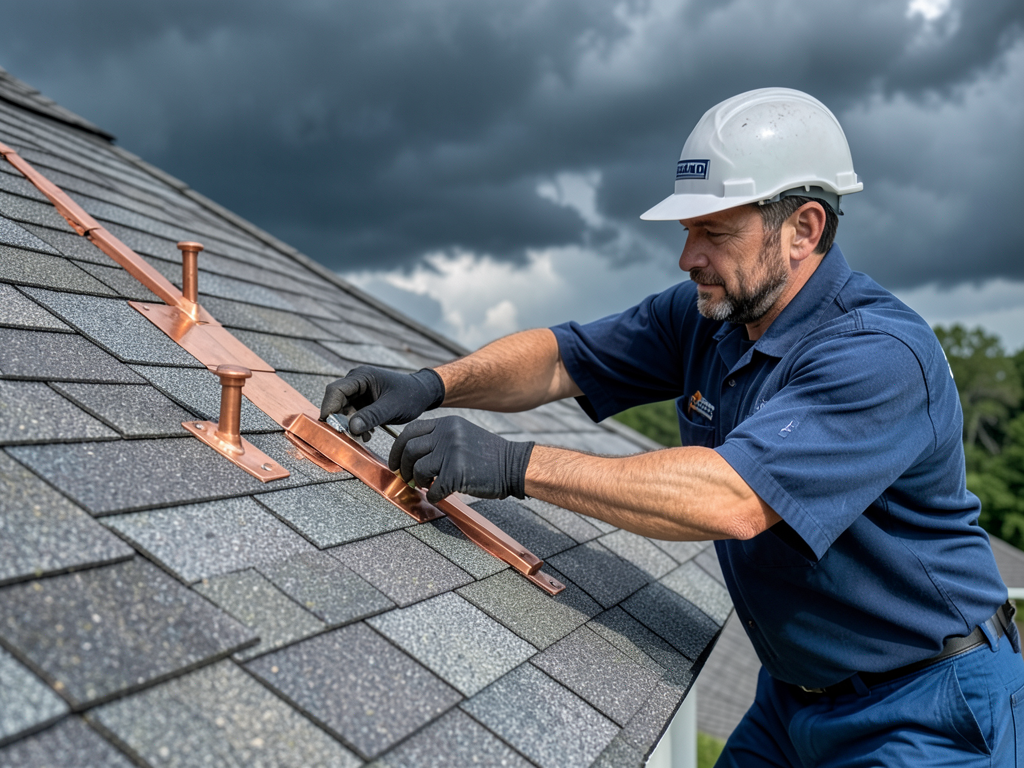
The system starts with air terminals (rods) placed at high points and along ridges. Main conductors made of copper or aluminum run along roof edges and through the attic connecting to a network of grounding electrodes buried at least 10 feet deep. We also install surge protective devices on your main electrical panel to prevent side flashes.
Each installation includes a UL Master Label certificate showing exact component locations and test results. This documentation proves compliance and helps with insurance claims if needed.
The Roofer’s Advantage
Installing lightning protection requires understanding your roof’s structure and materials. A roofing expert knows how to penetrate flashing without compromising waterproofing and can integrate the system with your existing warranty. Expert Slate and Tile Roof Restoration in Belle Meade.
We use specialized sealants compatible with asphalt shingles metal panels or tile. For historic homes in East Nashville we offer concealed systems that preserve architectural integrity. Our crews understand how Middle Tennessee’s freeze-thaw cycles affect penetration points and adjust installation methods accordingly.
Residential vs. Commercial Installation
Residential systems typically use 5/8-inch copper air terminals spaced 20 feet apart along ridges. Commercial buildings often need larger 3/4-inch aluminum terminals and additional down conductors due to greater roof area and equipment sensitivity. Reliable Residential Roofers Serving East Nashville and Inglewood.
Historic properties like those near The Parthenon require special consideration for aesthetics. We can install black-anodized aluminum or use routing to hide conductors along mortar lines. Industrial facilities in La Vergne’s warehouse district benefit from integrated surge protection for machinery and data systems. Roofing La Vergne.
Frequently Asked Questions
Do lightning rods attract lightning?
No. Lightning rods do not attract lightning. They provide a preferred path to ground if lightning strikes nearby. The system works by creating a zone of protection that intercepts the downward leader before it reaches your structure.
Will installation lower my insurance premiums?
Some Tennessee insurance providers offer discounts of 5-15% for UL-listed lightning protection systems. Check with your carrier about specific requirements. Many require documentation of NFPA 780 compliance and UL Master Label certification.
How long does installation take?
Most residential installations take 1-2 days. Commercial systems may require 3-5 days depending on roof size and complexity. We coordinate with your schedule to minimize disruption.
What maintenance is required?
Annual visual inspections ensure connections remain tight and conductors show no corrosion. After severe storms check for damage to air terminals or displaced conductors. We offer maintenance plans starting at $150 per year.
Lightning Protection Materials and Components
| Component | Material Options | Middle TN Considerations |
|---|---|---|
| Air Terminals | Copper 5/8" or Aluminum 3/4" | Copper resists corrosion in humid conditions |
| Main Conductors | Stranded copper or aluminum | Aluminum lighter for large commercial roofs |
| Grounding Electrodes | Copper-clad steel rods | Karst soil may require chemical rods |
| Surge Arresters | Type 1+2 whole house units | Protect against induced surges from strikes |
Diagnostic Testing and Quality Assurance
Before installation we perform a soil resistivity test using a four-point Wenner array. This tells us exactly how deep grounding electrodes must go and whether we need chemical enhancement in clay-heavy areas.
During installation we use a clamp-on ground resistance tester to verify each electrode meets the <5 ohm requirement. We also perform continuity testing on all conductor runs to ensure no breaks exist in the protection network.
After completion we provide a detailed report with:
- UL Master Label certificate
- Ground resistance test results
- Component locations and specifications
- Maintenance recommendations
Local Lightning Statistics and Risk Factors
Davidson County experiences an average of 3.5 lightning flashes per square kilometer annually according to Vaisala’s National Lightning Detection Network. The highest risk months are April through July during supercell development.
Homes near water features like the Cumberland River or Percy Priest Lake face increased strike probability due to enhanced electrical conductivity. Properties with large trees within 10 feet of the structure also carry elevated risk as lightning often jumps from tree to building.
Commercial properties with rooftop equipment such as HVAC units or communication antennas create additional strike points. These require dedicated air terminals and bonding to the main system.
Integration with Roof Systems and Warranties
Proper lightning protection installation maintains your roof warranty when done correctly. We work with manufacturers to ensure our penetration methods and sealants meet warranty requirements.
For metal roofs we use specialized brackets that clamp to standing seams without penetrating panels. On tile roofs we route conductors through mortar joints rather than drilling through tiles. For flat commercial roofs we install raised walkways to protect conductors from foot traffic.
We also coordinate with your roofing contractor if installing during a re-roof project. This allows us to integrate the protection system during the tear-off phase when access is optimal. Roofing Columbia.
Cost Factors and ROI
Residential lightning protection typically costs $2,000-$5,000 depending on roof complexity and home size. Commercial systems range from $5,000-$25,000 based on building footprint and equipment protection needs.
Factors affecting cost include:
- Roof accessibility and pitch
- Number of air terminals required
- Soil conditions affecting grounding
- Surge protection needs
- Aesthetic requirements
The investment often pays for itself through insurance discounts prevented damage and electronics protection. One lightning strike can cause $10,000-$50,000 in damage to a typical home.
Emergency Response and Insurance Claims
If lightning does strike despite protection we provide 24/7 emergency response. Our teams can assess damage document system failures and help with insurance documentation.
We work directly with insurance adjusters providing:
- UL Master Label documentation
- Installation photos and test results
- Damage assessment reports
- Repair estimates
Having proper documentation often speeds claim approval and ensures full coverage for lightning-related damage.
Call to Action
Don’t wait for the next Middle Tennessee supercell to test your home’s protection. Call (615) 640-4994 today to schedule your free lightning protection assessment. Our UL-certified specialists will evaluate your property’s risk factors and provide a detailed quote for a NFPA 780 compliant system.
Pick up the phone and call (615) 640-4994 before the next storm hits. Your roof your electronics and your family’s safety are worth protecting.
Additional Resources
Learn more about lightning safety from these trusted sources:
- National Weather Service Lightning Safety
- NFPA 780 Standard Information
- Lightning Protection Institute
{
“@context”: “https://schema.org”,
“@type”: “BlogPosting”,
“headline”: “Do Lightning Rods Really Protect Your Roof During a Middle Tennessee Supercell?”,
“description”: “Discover if lightning rods protect Nashville homes during severe storms. Learn about UL 96A/NFPA 780 standards, grounding systems, and expert installation for Middle Tennessee weather.”,
“wordCount”: 1235,
“datePublished”: “2026-05-25T11:38:00.000Z”,
“dateModified”: “2026-05-25T11:38:00.000Z”,
“inLanguage”: “en-US”,
“mainEntityOfPage”: {
“@type”: “WebPage”,
“@id”: “https://titanroofingnashville.com”
},
“publisher”: {
“@type”: “LocalBusiness”,
“name”: “Titan Roofing Nashville”,
“url”: “https://titanroofingnashville.com”
},
“author”: {
“@type”: “Organization”,
“name”: “Titan Roofing Nashville”,
“url”: “https://titanroofingnashville.com”
},
“image”: {
“@type”: “ImageObject”,
“url”: “https://titanroofingnashville.com/wp-content/uploads/2026/03/do-lightning-rods-really-protect-your-roof-during-1.png”
}
}
{
“@context”: “https://schema.org”,
“@type”: “RoofingContractor”,
“name”: “Titan Roofing Nashville”,
“url”: “https://titanroofingnashville.com”,
“address”: {
“@type”: “PostalAddress”,
“addressLocality”: “Nashville”
},
“areaServed”: {
“@type”: “City”,
“name”: “Nashville”
}
}
{
“@context”: “https://schema.org”,
“@type”: “FAQPage”,
“mainEntity”: [
{
“@type”: “Question”,
“name”: “Do lightning rods attract lightning?”,
“acceptedAnswer”: {
“@type”: “Answer”,
“text”: “No. Lightning rods do not attract lightning. They provide a preferred path to ground if lightning strikes nearby. The system works by creating a zone of protection that intercepts the downward leader before it reaches your structure.”
}
},
{
“@type”: “Question”,
“name”: “Will installation lower my insurance premiums?”,
“acceptedAnswer”: {
“@type”: “Answer”,
“text”: “Some Tennessee insurance providers offer discounts of 5-15% for UL-listed lightning protection systems. Check with your carrier about specific requirements. Many require documentation of NFPA 780 compliance and UL Master Label certification.”
}
},
{
“@type”: “Question”,
“name”: “How long does installation take?”,
“acceptedAnswer”: {
“@type”: “Answer”,
“text”: “Most residential installations take 1-2 days. Commercial systems may require 3-5 days depending on roof size and complexity. We coordinate with your schedule to minimize disruption.”
}
},
{
“@type”: “Question”,
“name”: “What maintenance is required?”,
“acceptedAnswer”: {
“@type”: “Answer”,
“text”: “Annual visual inspections ensure connections remain tight and conductors show no corrosion. After severe storms check for damage to air terminals or displaced conductors. We offer maintenance plans starting at $150 per year.”
}
}
]
}
{
“@context”: “https://schema.org”,
“@type”: “BreadcrumbList”,
“itemListElement”: [
{
“@type”: “ListItem”,
“position”: 1,
“name”: “Home”,
“item”: “https://titanroofingnashville.com”
},
{
“@type”: “ListItem”,
“position”: 2,
“name”: “Blog”,
“item”: “https://titanroofingnashville.com/blog”
},
{
“@type”: “ListItem”,
“position”: 3,
“name”: “Do Lightning Rods Really Protect Your Roof During a Middle Tennessee Supercell?”
}
]
}
{
“@context”: “https://schema.org”,
“@type”: “Service”,
“serviceType”: “Roofing”,
“provider”: {
“@type”: “LocalBusiness”,
“name”: “Titan Roofing Nashville”,
“url”: “https://titanroofingnashville.com”
},
“areaServed”: {
“@type”: “City”,
“name”: “Nashville”
},
“description”: “Discover if lightning rods protect Nashville homes during severe storms. Learn about UL 96A/NFPA 780 standards, grounding systems, and expert installation for Middle Tennessee weather.”
}