
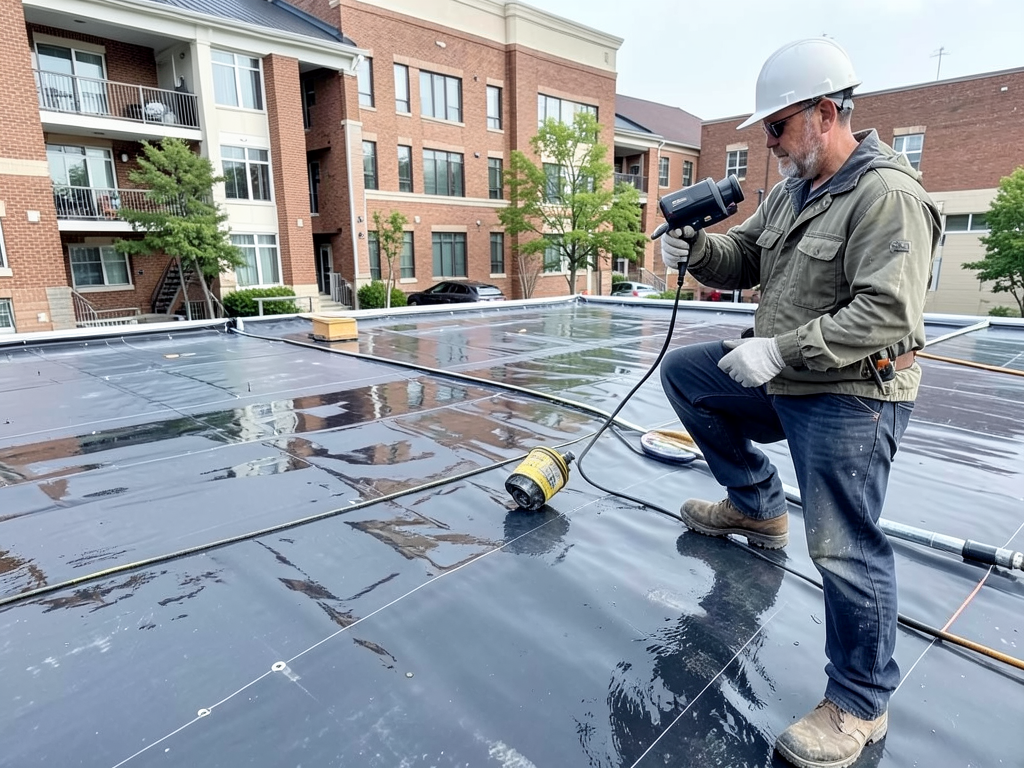
Solving Common Flat Roof Leaks for Downtown Nashville Condos
Flat roof leaks in Downtown Nashville condos require specialized expertise. The Cumberland River Valley’s high humidity, rapid freeze-thaw cycles, and urban debris create unique challenges for low-slope roofing systems. Property managers and condo owners need immediate solutions that address both the visible leak and the underlying cause.
Common issues include ponding water from clogged scuppers, membrane seam failures from thermal expansion, and flashing deterioration around rooftop equipment. These problems worsen quickly in Nashville’s climate, where summer heat accelerates material breakdown and spring storms test drainage systems. Understanding these patterns helps prevent recurring damage.
Professional flat roof repair involves more than patching visible damage. It requires infrared moisture scanning to locate hidden water intrusion, proper surface preparation for membrane adhesion, and installation techniques that account for Middle Tennessee’s weather extremes. The right repair extends roof life and protects interior spaces from costly water damage.
Common Flat Roofing Issues in Downtown Nashville
Urban flat roofs face specific vulnerabilities. Debris from nearby trees accumulates in drainage systems, creating ponding water that stresses the membrane. The area’s clay soil foundation causes building settling that creates stress points at parapet walls and equipment curbs. Temperature swings of 40-50 degrees between summer afternoons and winter nights cause expansion and contraction that weakens seams over time.
Condo buildings near Broadway and the Gulch experience accelerated wear from rooftop HVAC units and restaurant exhaust systems. Grease and chemical residues eat through certain membrane types, while constant equipment vibration loosens fasteners. Building age matters too—structures from the 1970s and 1980s often have modified bitumen systems reaching the end of their service life.
Water testing reveals that most downtown leaks originate 10-15 feet away from where water appears inside. This happens because water travels along the roof deck before finding a penetration point. Without proper leak detection, repairs often miss the actual source, leading to repeated service calls and tenant complaints.
Flat Roof Systems We Service in Nashville
TPO (Thermoplastic Polyolefin) membranes dominate newer downtown construction. These white reflective surfaces resist UV damage but require precise heat welding at seams. Temperature must stay within 500-600 degrees Fahrenheit during installation—too hot and the material burns, too cool and the weld fails. Nashville’s humidity affects cooling rates, making experienced technicians essential.. Read more about Why Commercial Flat Roof Maintenance is Essential for Nashville Businesses.
EPDM (Ethylene Propylene Diene Terpolymer) rubber roofing works well for older buildings but develops shrinkage cracks over time. The material expands about 3% in summer heat and contracts in winter, creating stress at termination bars and counterflashing. Proper adhesive selection becomes critical since some modern caulks degrade EPDM over 3-5 years.
Modified bitumen torch-down systems, common in buildings from the 1980s-2000s, show wear patterns specific to Nashville’s climate. The asphalt content softens during summer heat, allowing aggregate loss and UV exposure. Seam lifting occurs when the torch application doesn’t reach proper temperature, creating weak points that fail during heavy rain.
PVC membranes offer excellent chemical resistance for buildings with rooftop kitchens or industrial tenants. The material welds at lower temperatures than TPO and maintains flexibility to -40 degrees Fahrenheit. However, PVC becomes brittle when exposed to certain rooftop chemicals, requiring careful product selection based on building use.
Our Nashville Repair Process
Every repair starts with infrared thermal imaging to detect moisture beneath the surface. This non-destructive testing identifies wet insulation areas that aren’t visible from the surface. Wet areas show as warmer spots since water retains heat longer than dry materials. This step prevents replacing sections that still have viable underlying structure.
Surface cleaning removes debris, loose material, and contaminants that prevent proper adhesion. We use low-pressure washing with appropriate cleaners for each membrane type—alkaline cleaners for TPO, solvent-based for EPDM. The surface must dry completely, which takes 24-48 hours in Nashville’s humidity, before repairs begin.
Membrane patching follows manufacturer specifications for overlap, adhesive type, and curing time. TPO patches require heat welding with automatic hot-air welders that maintain consistent temperature. EPDM patches use contact cement applied to both surfaces, allowed to tack, then pressed together. Modified bitumen patches need torch application with temperature monitoring to prevent burning through.
Final inspection includes water testing of all repaired areas. We simulate heavy rain with controlled water application, checking inside for any signs of penetration. Scupper drains and internal drains receive special attention since these are common failure points in downtown buildings where debris accumulates rapidly.
Flat Roof Repair vs. Replacement Decision Guide
| Factor | Repair Recommended | Replacement Recommended |
|---|---|---|
| Roof Age | Under 10 years | Over 20 years |
| Damage Area | Less than 10% of surface | Over 30% of surface |
| Membrane Condition | Good flexibility, no widespread cracking | Brittle, alligator cracking across surface |
| Insulation | Minimal moisture, good R-value | Extensive wet insulation, poor thermal performance |
| Building Use | Can tolerate some downtime | Critical operations need reliable protection |
Emergency Response for Downtown Condo Leaks
When water enters a condo unit, immediate action prevents extensive damage. The first 24 hours determine whether drywall, flooring, and personal property can be saved. Emergency tarping stops active leaks while permanent repairs are scheduled. This temporary protection uses heavy-duty materials secured against Nashville’s frequent wind events.
Water extraction begins immediately using commercial-grade equipment. Standing water in ceiling cavities creates perfect conditions for mold growth within 48-72 hours. Industrial dehumidifiers and air movers dry affected areas while moisture meters track progress. This prevents secondary damage that could cost thousands in restoration.
Insurance documentation starts with detailed photos of all damage, both visible and discovered during inspection. Many downtown condo associations require specific documentation formats for claims processing. Our team provides comprehensive reports that satisfy insurance adjusters and speed approval for necessary repairs.
Communication with building management and unit owners maintains transparency during emergency repairs. We provide regular updates on repair status, expected completion times, and any necessary access requirements. This coordination prevents confusion and ensures repairs proceed without delays from access issues.
Nashville Building Codes and Permit Requirements
Davidson County requires permits for all flat roof replacements exceeding 100 square feet. The permit process includes structural engineering review for buildings where the existing roof structure may not support new materials’ weight. TPO and PVC installations must meet ASTM D6878 and ASTM D4434 standards respectively, with documentation provided to the inspector. ASTM D6878 TPO membrane standard.
Energy codes in Davidson County require minimum R-20 insulation for new flat roof installations. This affects both replacement projects and recover installations where additional insulation may be needed to meet current standards. The county also mandates specific wind uplift ratings based on building height and location within the county. Davidson County building permit requirements.
Fire ratings become critical for buildings near property lines or with specific occupancy types. Class A fire-rated assemblies are required for most commercial applications, with documentation of assembly testing and certification. This affects membrane selection, as not all materials meet the highest fire safety standards.
Water quality regulations impact drainage system design. The Cumberland River watershed requires specific filtration and detention measures for roof runoff, affecting drain sizing and placement. Compliance with these regulations prevents fines and ensures the building meets all environmental protection requirements.
Maintenance Strategies for Long-Term Performance
Semi-annual inspections catch developing problems before they cause leaks. These inspections include membrane condition assessment, seam integrity testing, and drainage system evaluation. Spring inspections prepare for summer storms, while fall inspections address any damage from summer heat and prepare for winter conditions.
Drainage maintenance prevents most ponding issues. Scuppers need clearing of debris quarterly, with more frequent cleaning during fall when leaves are abundant. Internal drains require trap primer checks to ensure P-traps maintain water seals that prevent sewer gas entry. Proper grading with tapered insulation directs water to drainage points.
Reflective coatings extend membrane life by reducing UV exposure and thermal cycling. These coatings, typically silicone or acrylic, reflect 85-90% of solar radiation, lowering surface temperatures by 50-60 degrees Fahrenheit. This reduction in thermal stress can add 5-10 years to roof life in Nashville’s climate.
Sealant replacement around penetrations prevents the most common leak source. Sealants degrade from UV exposure and thermal movement, typically needing replacement every 5-7 years. This maintenance costs far less than interior damage repairs from failed seals around vents, pipes, and equipment curbs.
Service Areas in Downtown Nashville
We serve the entire downtown Nashville area including the Gulch, SoBro, Germantown, and East Nashville corridors. Our central location near I-40 and I-65 allows rapid response to emergencies anywhere within the downtown loop. We understand the specific challenges of each neighborhood, from historic building constraints in Germantown to modern high-rise requirements in the Gulch.
Properties near major landmarks like Nissan Stadium, the Ryman Auditorium, and Bicentennial Mall have unique access and permitting requirements. We coordinate with building management and local authorities to ensure repairs proceed smoothly without disrupting nearby businesses or residents. Our experience with downtown’s specific logistics prevents the delays common with less experienced contractors.
High-rise buildings require specialized equipment and safety protocols. We maintain certification for swing-stage use, fall protection systems, and high-angle rescue procedures. This expertise ensures worker safety and prevents damage to surrounding properties during repairs on buildings that may be 10-20 stories tall.
Historic buildings in downtown Nashville need preservation-minded repair approaches. We work with preservation boards when necessary, using repair methods that maintain architectural integrity while providing modern waterproofing performance. This includes matching original materials when possible and documenting all work for future reference.
Why Choose Professional Flat Roof Repair
Flat roof repair requires specialized knowledge that general roofing contractors often lack. The low slope creates different water movement patterns than pitched roofs, and the membrane systems require specific installation techniques. Our technicians receive ongoing training in the latest materials and methods, ensuring repairs meet manufacturer specifications and building code requirements.
Insurance considerations make professional repair essential. Improper repairs can void manufacturer warranties and create liability issues if water damage spreads to adjacent units. Our work includes documentation that satisfies insurance requirements and protects property owners from future disputes about repair quality or responsibility.
Cost effectiveness improves with professional service. While DIY repairs or inexperienced contractors might offer lower initial prices, the long-term costs of recurring leaks, interior damage, and premature roof failure far exceed professional repair costs. Our repairs include warranties that protect your investment for years.
Time efficiency matters in emergency situations. We maintain fully stocked service vehicles and have established relationships with suppliers for rapid material delivery. This allows us to complete most emergency repairs within 24-48 hours, minimizing disruption to building operations and tenant satisfaction.
Frequently Asked Questions
How long does a typical flat roof repair take?
Most repairs take 1-3 days depending on the extent of damage and weather conditions. Emergency tarping can be completed within hours of your call, with permanent repairs scheduled as soon as materials and weather permit.
Can I repair a flat roof leak myself?
DIY repairs often fail because the visible leak rarely indicates the actual source. Professional leak detection using thermal imaging finds the true entry point, preventing repeated failures and additional interior damage.
How much does flat roof repair cost in Nashville?
Repair costs vary based on damage extent, roof access, and material type. Small seam repairs might cost $500-1,000, while extensive moisture damage could exceed $5,000. We provide detailed estimates after inspection and moisture testing.
What causes most flat roof leaks in Nashville?
Common causes include ponding water from clogged drains, seam failures from thermal expansion, flashing deterioration around equipment, and membrane punctures from foot traffic or falling debris. Nashville’s humidity and temperature swings accelerate these problems.
How can I prevent future flat roof leaks?
Regular maintenance prevents most leaks. This includes bi-annual inspections, drain cleaning, sealant replacement around penetrations, and prompt repair of minor damage. Professional maintenance plans provide scheduled service that catches problems early.
Flat roof leaks in Downtown Nashville condos require immediate professional attention. The combination of urban debris, temperature extremes, and building settling creates unique challenges that demand specialized expertise. Don’t wait for small problems to become major damage.
Call (615) 640-4994 today to schedule your inspection. Our team provides fast, reliable service throughout downtown Nashville with the experience and equipment needed to solve your flat roof problems permanently. Emergency service available 24/7 for active leaks that can’t wait.
Pick up the phone and call (615) 640-4994 before the next storm hits. Quick action prevents extensive interior damage and keeps your building protected. We’ll assess your roof’s condition and recommend the most cost-effective solution for your specific situation.
{
“@context”: “https://schema.org”,
“@type”: “BlogPosting”,
“headline”: “Solving Common Flat Roof Leaks for Downtown Nashville Condos”,
“description”: “Expert flat roof leak repair for Downtown Nashville condos. Fast response, specialized materials, and code-compliant solutions for urban buildings.”,
“wordCount”: 2058,
“datePublished”: “2026-02-22T15:57:00.000Z”,
“dateModified”: “2026-02-22T15:57:00.000Z”,
“inLanguage”: “en-US”,
“mainEntityOfPage”: {
“@type”: “WebPage”,
“@id”: “https://titanroofingnashville.com”
},
“publisher”: {
“@type”: “LocalBusiness”,
“name”: “Titan Roofing Nashville”,
“url”: “https://titanroofingnashville.com”
},
“author”: {
“@type”: “Organization”,
“name”: “Titan Roofing Nashville”,
“url”: “https://titanroofingnashville.com”
},
“image”: {
“@type”: “ImageObject”,
“url”: “https://titanroofingnashville.com/wp-content/uploads/2026/03/solving-common-flat-roof-leaks-for-downtown-nashvi-1.png”
}
}
{
“@context”: “https://schema.org”,
“@type”: “RoofingContractor”,
“name”: “Titan Roofing Nashville”,
“url”: “https://titanroofingnashville.com”,
“address”: {
“@type”: “PostalAddress”,
“addressLocality”: “Nashville”
},
“areaServed”: {
“@type”: “City”,
“name”: “Nashville”
}
}
{
“@context”: “https://schema.org”,
“@type”: “FAQPage”,
“mainEntity”: [
{
“@type”: “Question”,
“name”: “How long does a typical flat roof repair take?”,
“acceptedAnswer”: {
“@type”: “Answer”,
“text”: “Most repairs take 1-3 days depending on the extent of damage and weather conditions. Emergency tarping can be completed within hours of your call, with permanent repairs scheduled as soon as materials and weather permit.”
}
},
{
“@type”: “Question”,
“name”: “Can I repair a flat roof leak myself?”,
“acceptedAnswer”: {
“@type”: “Answer”,
“text”: “DIY repairs often fail because the visible leak rarely indicates the actual source. Professional leak detection using thermal imaging finds the true entry point, preventing repeated failures and additional interior damage.”
}
},
{
“@type”: “Question”,
“name”: “How much does flat roof repair cost in Nashville?”,
“acceptedAnswer”: {
“@type”: “Answer”,
“text”: “Repair costs vary based on damage extent, roof access, and material type. Small seam repairs might cost $500-1,000, while extensive moisture damage could exceed $5,000. We provide detailed estimates after inspection and moisture testing.”
}
},
{
“@type”: “Question”,
“name”: “What causes most flat roof leaks in Nashville?”,
“acceptedAnswer”: {
“@type”: “Answer”,
“text”: “Common causes include ponding water from clogged drains, seam failures from thermal expansion, flashing deterioration around equipment, and membrane punctures from foot traffic or falling debris. Nashville’s humidity and temperature swings accelerate these problems.”
}
},
{
“@type”: “Question”,
“name”: “How can I prevent future flat roof leaks?”,
“acceptedAnswer”: {
“@type”: “Answer”,
“text”: “Regular maintenance prevents most leaks. This includes bi-annual inspections, drain cleaning, sealant replacement around penetrations, and prompt repair of minor damage. Professional maintenance plans provide scheduled service that catches problems early.”
}
}
]
}
{
“@context”: “https://schema.org”,
“@type”: “BreadcrumbList”,
“itemListElement”: [
{
“@type”: “ListItem”,
“position”: 1,
“name”: “Home”,
“item”: “https://titanroofingnashville.com”
},
{
“@type”: “ListItem”,
“position”: 2,
“name”: “Blog”,
“item”: “https://titanroofingnashville.com/blog”
},
{
“@type”: “ListItem”,
“position”: 3,
“name”: “Solving Common Flat Roof Leaks for Downtown Nashville Condos”
}
]
}
{
“@context”: “https://schema.org”,
“@type”: “Service”,
“serviceType”: “Roofing”,
“provider”: {
“@type”: “LocalBusiness”,
“name”: “Titan Roofing Nashville”,
“url”: “https://titanroofingnashville.com”
},
“areaServed”: {
“@type”: “City”,
“name”: “Nashville”
},
“description”: “Expert flat roof leak repair for Downtown Nashville condos. Fast response, specialized materials, and code-compliant solutions for urban buildings.”
}