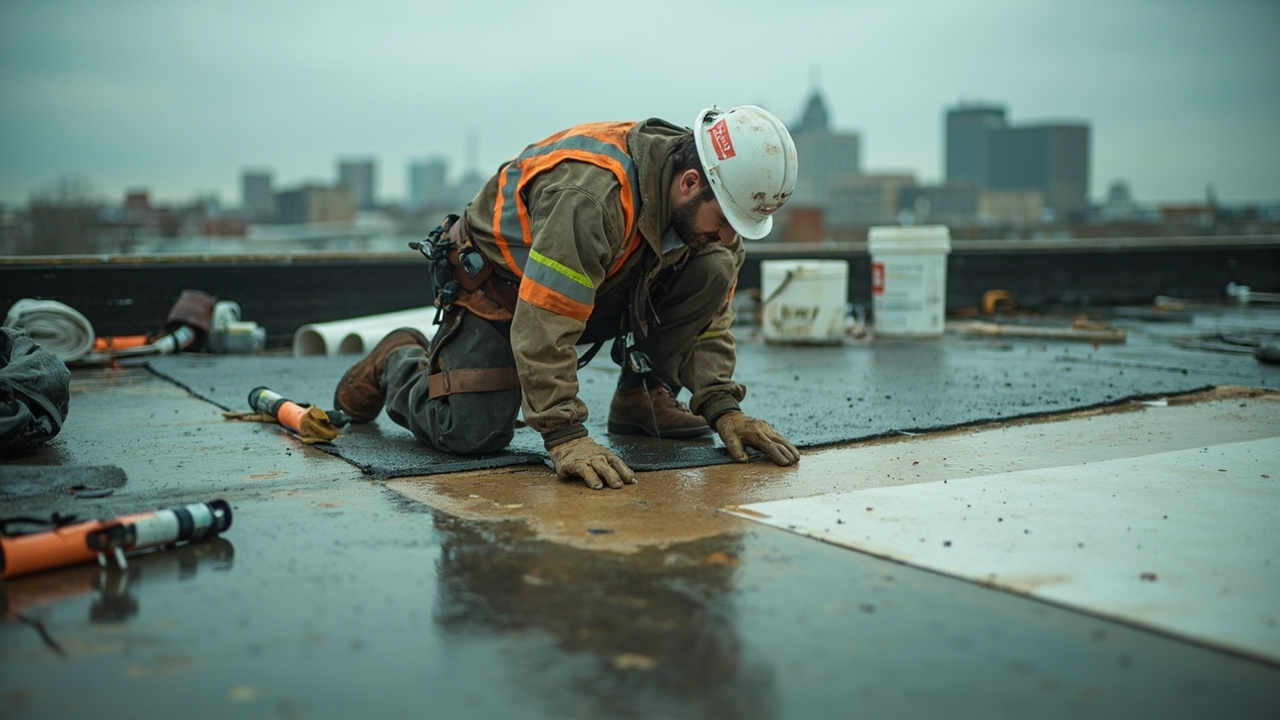


Nashville sits in a weather convergence zone where Gulf moisture collides with Appalachian cold fronts, creating sudden, violent thunderstorms that dump two to three inches of rain in less than an hour. Flat roofs depend on functioning drainage systems to shed water at a rate faster than rainfall intensity. When a drain clogs with debris from Nashville's heavy tree canopy or a seam fails during thermal cycling, that drainage capacity disappears. Water pools, weight accumulates, and membranes tear. The city's spring storm season runs March through May, with secondary severe weather in November. These are the months when emergency flat roof repair calls spike because small vulnerabilities become catastrophic failures under sustained rainfall.
Titan Roofing Nashville has been patching flat roofs across Davidson County for years, and we understand the specific failure modes common to this region. We know that buildings near Percy Priest Lake experience higher humidity and faster membrane degradation. We know that roofs in the Gulch and downtown face wind uplift challenges from urban canyon effects during storms. We know that older industrial buildings in Bordeaux and North Nashville have undersized drainage systems that cannot handle modern rainfall intensity. This local knowledge allows us to diagnose failures faster and apply patches that account for the environmental stressors unique to Middle Tennessee.